
Heliciel uses two main types of propellers:
1: Propeller turbine for energy recovery, designed to capture the kinetic energy of a fluid, Exemples:
Wind turbines and windmills are equipped with propellers capturing energy from the wind.
The Kaplan turbine propellers type capture the kinetics energy of a stream of water .
the tidal turbines are submerged propellers that capture the energy of ocean curren
2:Propellers intended to supply energy to the fluid . Exemples:
Fans and ventilators provides energy to the air by increasing its speed or pressure
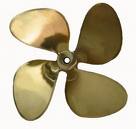
the propellers of the aircraft or ship propellers, accelerate the fluid in which they move, the change in the momentum of the air or water generates the propulsive force by reaction on the propeller.
The axial flow pumps or fan pump, supply energy by increasing the pressure or the flow velocity
lexicon of wind turbine
The lexicon of the book "the great book of the wind" by Paul Gipe, published by "The Monitor" gives us an idea of the richness and abundance of information from this reference in matters of wind energy.
Livestock watering: important application for small wind turbines and small photovoltaic systems in the U.S. Great Plains, the Argentine pampas and
steppes of Central Asia. The livestock watering is essential for its survival on the semi-arid grasslands, and an adequate supply of water is essential to weight gain.
Subscribers: customers of electricity companies.
Calm: calm. Period without wind.
Wind acceleration: increasing wind speed due to terrain features, such as the curvature of a colline.Caractéristiques ground, like a narrow mountain pass,
which increase the speed of the wind.
Flexible coupling: torsionally flexible transmission maximum absorbing torque loads by displacement of the multiplier or couplings.
Acoustics: study of sound.
Pumped storage: storage means for off-peak electricity by pumping water into a tank upstream. At peak, the water passes through a hydroelectric turbine to generate electricity.
Visual acuity: sharpness of visual perception.
ADEME: Environment Agency and control
energy.
Advanced wind turbine (AWI): literally, innovative wind turbines. Term adopted by the U.S. Department of Energy (Deo) and the National Renewable Energy Laboratory
to designate a class of wind turbines designed in the early 1990s. This name was introduced by a grant recipient. Society and the wind in question no longer exist.
AEI: Alternative Energy Institute, West Texas A & M University Canyon, All. Dote
a test center wind.
Aermotor: commercial name of the multi-blade wind turbine best known among those manufactured in North America.
Aeroelasticity, study the effect of aerodynamic forces on the clastic body, such as turbine blades.
Spoiler: aerodynamic device, such as blade tip to swivel, or aerodynamic brake parachute, allowing deralentir the speed of the wind turbine rotor. Trailing edge flap or aerodynamic brake. Degradation mechanism of the aerodynamic performance of a wind turbine blade for limiting the speed and torque of the rotor in strong winds.
WTG: another name for wind in use in Europe.
a strict interpretation of the term suggests that a wind turbine is a machine that generates air. A wind turbine is used to generate electricity.
Wind wheel: American wind pump adapted to perform tasks other than pumping.
AEROTURBINE: wind turbine. Synonym wind turbine; formed according to the same structure.
Noise disturbance: disturbance due to noise. To a lesser impact than noise interfering with an activity, such as sleep or communication.
AID: Agency for International Development (Agency for
dévdoppernent in: err, ational), United States.
IEA: International Energy Agency (Vienna).
Fins: diminutive wing, means "little wings". Control surfaces towards the ends of the wings. When a wing flap mounted, the aileron on the other wing goes down. On aircraft. the flaps are placed after the fins closer to the root. Flaps
each side of the body move in the same direction, often down. They increase the drag to slow the velocity of the air. The term also applies to fins mobile flaps at the end of the trailing edge of wind turbine blades to reduce power in high winds.
Permanent magnets based on rare earths: permanent magnets made from metallic elements with atomic numbers between 57 and 71, the lanthanides. The designers of wind turbines may use permanent magnets based on rare earths, such as those made from a compound neodymium-iron-boron magnetic because their density is higher than that of conventional magnets iron oxide base.
Alignment wind: wind at different heights aligned vertically or horizontally depending on the prevailing wind park.
Alignment of the blades to stop: Technical supposed reduce visual clutter caused by the two-bladed wind turbines, rotors of stopping all of a wind park in the same position, preferably horizontal. Offered for the first time by landscape of the Polytechnic University of California, Pomona, in the mid 1980s.
Altamont Pass: Pass low altitude between California Livermore Valley from the San Joaquin Valley about 80 miles east of San Francisco. This region is one of the most
large producers of wind power in the world: 0.8 to 1.1 TWh per year in the early 2000s.
Alternator: generator producing an alternating current.
Alternators permanent magnet generators using permanent magnets to produce the magnetic field. Most small wind turbines are equipped with alternators
permanent magnets.
Density Altitude: aeronautics term corresponding to the change in air density as a function of altitude and temperature.
Aluminum: light metal past without much success of the aviation sector in wind power, which he joined in the composition of wind turbine blades. This soft metal suffered ruptures
fatigue when its use in wind energy applications and is no longer used in commercial wind turbines blades.
Friends of the Earth, the: International environmental group located in the most developed countries.
Amortization of orientation movements decrease or delay the movement direction.
"Ampere (AMP): A unit of electrical power equivalent to a flow of electric charges of one coulomb per second or constant current transferred by a voltage of 1 volt applied to a resistance of 1 ohm.
Amp-hours: measuring the storage capacity of batteries. An amp-hour will deliver 1 amp of current for one hour at the battery voltage. The amp-hours multiplied
the battery voltage gives Watthours corresponding to the electrical energy stored.
Anchoring guy: media designed for anchoring struts a guyed tower.
Anemometer: An instrument for measuring and displaying the speed of the wind. This term is often limited to the sensor from the wind, but it actually encompasses the associated sensor device
display.
Cup anemometer: aerodynamic braking device for measuring vertical axis wind, which operates with cups mounted on the radial arms. This is the form of sensor the most common wind.
Angle: angle formed by the chord of a profile and the relative wind or apparent wind.
Cone angle: on a conventional wind turbine, angle formed by a plane perpendicular to the axis of rotation. The existence of angle is due to the appearance of the rotor of most
wind turbines in the wind. Indeed, the rotor sweeps a slightly conical surface whose apex is the hub.
Angle of incidence of the blade: angle between the rope and the direction of movement.
Orientation angle: angle around a vertical axis formed by the wind direction and the rotor axis of a horizontal axis wind turbine.
Wind Atlas: all wind resource maps regions regions
Autoeffacement: rotor control system used on conventional small wind turbines whose guidance is provided by the rotor rudder automatically swivels back by
windy. This can be achieved using a vane, or by offsetting the axis of the rotor by means of a pivot or axis of rotation. The couple is counterbalanced by weights or
springs on U.S. wind or hinges between the rudder and the nacelle.
Auto excitedly internal excitation of the field generator as opposed to excitation by an external source.
Avian autopsies, autopsies birds.
AWEA American Wind Energy Association. American association of professionals in the wind industry.
Shaft: Shaft Supporting the wings of a traditional European wind mill. The axes of most Dutch windmills were made of wood and consisted of a single room. German mills, Danish and British used axes consist of one, two or three pieces of wood or metal.
Axis orientation: vertical axis around which the nacelle of a wind turbine with a horizontal axis in response to changes in wind direction.
Rotor axis: axis around which the rotor of a conventional wind éolienne.Sur, the rotor axis is almost horizontal, the Darrieus turbine, it is vertical.
Vertical axis: pivot around which the rotor of a conventional wind turbine to move or into the wind.
Azimuth: angle formed by a given direction and the direction of rotating about a vertical axis object. Often applies àl'orientation a horizontal axis wind turbine. See also
Lace.
Slip Rings: series of metal rings used to trans-
to an electrical current or signals from a rotating shaft
a fixed shaft. Used on most small wind turbines
to transfer power generated by the generator
pod, which rotates in response to changes in direction
wind at fixed conductors in the mast. Wind turbines
medium using a controlled winding of cables
instead of electrical slip rings to conduct
the electricity generator to earth.
Lease: contract authorizing the use of property for a period
given in exchange for the payment of rent or rede-
vance. Also fee.
Rebar: Reinforcing bar or rod used to ren-
force the concrete.
Root of the blade: portion of the blade closest to the hub or
portion of the flange closest to the fuselage. The flange is
shaft connecting the blade to the hub.
The nacelle frame: frame. Frame on which are fixed the generator
tor, the gearbox and other components of a
wind turbine. Part of the nacelle of a wind turbine which is based
the rotor and other components.
Battelle Pacific Northwest Laboratory: private laboratory in
Richland, Washington, working for the
behalf of the U.S. Department of Energy and specialized
j in the assessment of U.S. wind resources.
Battelle has delegated its functions in terms of resources
wind turbines at the National Wind Technology Center of the National
Renewable Energy Laboratory.
Beat: movement of the blade in and out of the plane of rotation
tion of a rotor with horizontal axis.
Betz, Albert German aerodynamicist native of Gottingen.
He discovered that the best wind will never
capture more than 16/27 (0,593) of the total energy of the wind.
Thus, the Betz limit is the maximum theoretical yield
a wind turbine.
BLM: Bureau of Land Management (USA). Federal Agency
line administering public lands west of the United States.
Ii receives a fee for wind projects Corners for
San Gorgonio and Tehachapi.
BMFT: Bundesministenium für Forschung und Technologie.
German Ministry of Technological Development.
Original sponsor of the grant program
"250 MW", now administered by the Bundesministenium
für Bildung, Wissenschaft, Forschung und Technologie
(BMBF).
Composite wood assembling blocks of wood or veneer
and polyester or epoxy resins for the manufacture of
wind turbine blades.
Bonneville Power Administration: Public Agency commercial
keting of energy serving the northwest coast of
United States.
Bora: arctic wind blowing in gusts sometimes accompanied
nied beans from the mountains of ex-
Yugoslavia to Adniatique Sea.
Edge: before an airfoil. Area Profile
who first meets the relative wind.
Trailing edge: opposite to the edge of the edge profile aero-
dynamics.
Blade tip: part of the blade facing away from the hub and
base of the blade.
BPA: See Bonneville Power Administration.
Control arm: part of the structure of a horizontal axis wind turbine ver-
tical cylindrical rotor and which support blades.
Bride: almost archaic term referring to the bar or rod connecting
the blades to the hub of the first turbine. Today, the
Most wind turbines use a blade attachment system
different.
Breeze: wind generated by the temperature difference between land
and large bodies of water. During the day the earth
warming faster than water. This phenomenon leads to the for-
formation of a breeze blowing from the sea to land (breeze
Sea). At night, the land cools faster than the sea, general
as a breeze blowing from land to sea (land breeze).
Sea breeze: light wind blowing from the sea to the land, generated
by the temperature difference between the land and sea Wind
daytime as opposed to the land breeze, a wind jib
turne. See Breeze.
Brushing: brushing English. Deformation of branches
trees and shrubs in areas of high wind Oia "the
branches bend in the wind like the bristles of a fur
that would have been brushed in one direction. " Brushing is the indica-
most sensitive tor speed and wind direction. The
"Port flag" (flagging) and the "decline" (throwing)
indicate wind speeds higher than those responsible
brushing. (Putnam).
Noise: unwanted sound.
Acoustic noise audible extraneous sounds or not.
Ambient noise level of background noise.
White noise: noise covering the entire frequency spectrum.
Buffalo Ridge topographic accident lowland starting
Watertown, South Dakota, south-
west and across the southwestern Minnesota to spinit
Lake, Iowa. Along the "minnesotienne" the
Buffalo Ridge wind resources are sufficient to provide
60% of the electricity consumed in the state in 1990.
Bundesverband Windenergie: German Federal Association
owners of wind turbines. Largest association of its kind
in the world. Sometimes translated as "German Association
wind energy. " However, it should not be confused with
professional associations of wind energy (Wind
energy trade associations) officiating in English speaking countries,
because often they represent only fabni-
facturers of wind turbines and wind farm developers.
Burec: Bureau of Reclamation (United States). Federal Agency
land in the western United States,
sible for the construction of large reservoirs in
Rockies. Federal agents often Burec environmental
wise to use these tanks to store wind power.
A built wind pitiful WTS4 Hamilton Standard, a
juggernaut 4 MW located near Medicine Bow, in the
Montana orphan for many years.
BWE see Bundesverband Windenergie.
BWEA: British Wind Energy Association. Professional association
British dimensional wind sector.
Hoisting rope: rope used to raise and lower
mast light equipment and tools.
Cable stabilizer: light cable to stabilize loads
unwieldy hoisted by a crane. Tag lines
possible to prevent the rotor from being damaged when
hoisted up the car.
Braided cable flat: thick rope temporarily used as
guy or used to raise or lower equipment
a heavy mast.
Calm period without wind.
Camber: measurement of the curve formed by a profile section,
such that the ratio of the distance between the top of the
curve and the rope and the rope length.
Cantilever: beam, pipe or other structure cantilevered overhang,
that is to say, supported or secured at one end only. A
unstayed pipe, or a self-supporting tubular mast are
door overhang. All modern horizontal axis wind turbines
use blades door overhang. The blades are attached to
rotor in one place, the rod.
CanWEA: Canadian Wind Energy Association.
Surge Capacity: production units used to meet
peak demand for electricity. In the past, units
art were characterized by investment costs
small but significant expenses. They Mali-
generally saient gas turbines, which allowed them to
start and quickly be exploited to their maximum
capacity.
Monitoring capacity of power: measuring the response of com-
nies electricity to a load change. When it
This increases the system responds by increasing the production
existing units or by increasing the number of units
operation. When the load decreases, the system
off certain units of the production or decreases
units in operation.
Medium capacity of wind power in kW
obtained by multiplying the rated power of the wind
by its load factor for a given period.
Equity: component representing the balance right
property assets, net external liabilities.
Investors accept the risks associated with investing
in the hope of making profits.
Electrical characteristics: standardized description of characteristics
ticks of the electricity produced by a wind turbine and delivered to the
load, such as voltage, the phase and the current type.
The American Wind Energy Association recommends include
in technical product documentation.
Design features an arbitrary characteristics
wind power in kilowatts. See power.
Fairing: structure surrounding the rotor of a wind turbine, used to
concentrate or increase the flow of wind to capture Davan-
tage of energy. Structure used to deflect the wind around
an object such as a mast, in order to reduce drag or tur-
lence.
Nacelle fairing: soundproofing element and pro-
protection assemblers in bad weather on the wind
medium.
Fairing multiplier: generally refers the case
metal surrounding a multiplier. See multiplier.
CAT: Centre for Alternative Technology (Wales). Focus
alternative energy. Each year, 60 000
90,000 tourists visit the exhibition dedicated to energy
Replacement held at CAT.
DC: see DC.
EC: European Community (now European Union).
CEC: California Energy Commission, located in Sacramento.
Second energy agency in the world, after the department
ment American Energy. Responsible for site selection
siting of power plants.
Photovoltaics: solar cells. Solar cells. Platelets
A laminated silicon that convert sunlight directly
sunlight into direct current.
Central base: providing a continuous central part of the
power demand during the day.
Powerhouse major power plant producing
large amounts of electricity to meet the needs of
an entire region, as opposed to production sources
power dispersed.
Wind power: wind park comprising several one
site and a single entity, such as steam turbines
a coal plant. Any group of wind turbines used to
generate electricity.
Generator running in semi-base: power plant used
to meet the daily and seasonal variations
the electrical load. Use of this average annual
type of station is less than that of the central core,
but greater than that of the central peak.
Centre for Alternative Technology: see CAT.
Cervantes author of the novel Don Quixote, who tells the story
a noble crazy fighting against windmills in
Spanish plains of La Mancha.
Chain: as a string fixed at both ends and collapsed
under the effect of gravity. Form of a rope for rotation. Of
Many Darrieus rotor blades using parabolic
whose shape approaching that of a chain to reduce
bending stresses.
Load power demand.
Load shedding: dump load. In a series of charges
powered by a wind turbine, whose electrical charge level
Priority is the lowest, used to absorb load
Excess production; charge used to maintain
desired voltage or frequency on an isolated network.
Peak load: maximum load or force exerted on a structure,
or maximum power in a power system.
Diversified Load mixture of different types of devices
powered by electricity. At various residential sense,
electrical and electronic equipment, as opposed to
heating load and electric water heater.
Emergency loads: high power loads supplied
only when the main loads are no longer
able to meet the demand. See also load
shedding.
Battery charger wind: wind turbines producing power
Stream Direct or corrected, usually small, used-
Sees in the autonomous systems including batteries
storage.
Chinook: hot, dry and strong wind down the eastern slope
the Rocky Mountains.
Shear force perpendicular to the longitudinal axis
dinal a bar, a beam or a rod.
Wind shear: variation of wind speed based on
altitude. Also gradient wind speed.
NRC National Research Council of Canada.
Coefficient of vertical gradient of the wind speed: number
empirically determined from the surface roughness and
used in the power law model to estimate the variation
tions of wind speed with altitude. See Act of
power. The vertical gradient coefficient of grassland
U.S. Great Plains is equal to about one-seventh.
Power coefficient: Cp. Quotient of the energy captured by a
wind by wind energy. Measurement of aerodynamic efficiency
nomic rotor. The rotors using airfoils
modern and exploited the peripheral speed of survival have
power coefficient between 0.35 and 0.45 Cp.
Coefficient of land use: measuring the area of land
used by the wind from the installed power,
swept area or annual production. Open parks
such as parks in Europe characterized by a spacing
8 rotor diameters of 10 rotor diameters occupy
100 m2 of land per m2 of swept area. Parks more
dense as the California parks, use only 20 m2
land per m2 swept area for a distance of about 3
6 rotor diameters.
Collector: device concentrating the flow of wind that hits the
rotor. See flux concentrator. The collectors were
proved to be too bulky and too expensive for applications
wind turbines. The benefits of a collector can
be achieved at lower cost by increasing the swept area
the rotor of a conventional wind turbine.
Downer: galvanized smooth inner pipe in
which moves the rod pumping windpumps.
Public Service Commission: Public utiliiy commission or Public
Service Committee. Public regulator
electricity and other public monopolies.
Transfer Switch: Power switch for
disconnect from the network subscribers a company of electricity
city to connect to a system of electricity production
independent. Frequently used in rural America
to provide electricity in case of system failure dis-
tribution electricity.
Switching network: an electronic conversion
which uses the waveform of the alternating current for
~ Trigger electronic devices such as thyristors.
Municipal utility company: Electricity Company
owned by a municipality and its citizens, as opposed to
private power companies, whose owners can
reside anywhere, and national utilities.
Public Power Corporation: utility in the
property of the people, a nation, a state or another
geographic entity.
Private Companies: Private utility companies profit
profit
Network compatibility: AC output
meet the requirements of an electricity company
terms of voltage and frequency.
Flux concentrator: a device that in theory ac-
increasing the air flow through the rotor of a wind turbine by effect
Venturi. Collector called when the wind and diffuser
when the wind.
Capacitor: dispositifde storing an electrical charge. The
capacitors are used to increase the factor can
power of induction generators. The capacitors
Wind turbines are often sized to com-
think reactive power generators when the load
is zero.
Power conditioning: treatment or conversion
electricity produced by a generator or issued by a sys-
distribution system. See also synchronous converter.
The electricity produced by wind turbines with variable speed
generally variable frequency and voltage. In most
part of the system, this power must be conditioned or
treated before it can be used by devices nécessi-
as a frequency and a constant voltage.
Drivers: metallic cables used to transmit
electricity.
Conduit: metal pipe or plastic protecting driver
ers against damage.
Cone rotation: swept by the blade surface longitudinal axis
the rotor of a wind turbine in the classic. The shape
conical allows both the elimination of certain expenses
bending and guiding leeward wind turbine without there
needs a vane or a mechanical system
orientation. The cone is more apparent in the wind
the wind, but it is also present on some turbines
upwind. It is less pronounced on the latter because there are
a risk that the blades come into collision with the pole. The
upwind rotors of large wind turbine shape
tapered, which allows the blades away from the mast.
Configuring the wind: the type and number of blades, locations
ment relative to the mast and rotational axis of the rotor.
Network Connection: electrically connecting a wind turbine
distribution and transmission airlines
electricity, as opposed to a production system independent
during which is not connected to the general electrical network.
Consumables consumed during a normal stage
operating male and maintenance of a wind (fluid
hydraulics, lubricants, filters, etc..).
Heat rate: The amount of heat necessary
sary to produce 1 kWh of electricity in a central
heat. The specific heat consumption of
conventional power plant is approximately 2500 kcal per kWh. The
specific consumption of a modern plant cycle
combined is approximately 1750 kcal per kWh.
Contactors electrical relay used to establish contact between
a wind turbine and network utilities.
Bending stress: stress created when a load is relied-
chir or bend a cantilever beam. Wind pressure on
rotor blade results in the appearance of a stress
~ flexing at the junction between the flange of the blade and the
hub.
Fixed Price Contract: Payment of wind power at a rate
during a predefined time period. German law
demand for renewable energy sets a fixed price for
the first five years of the contract. See also Price
Counterweights on bladed wind turbines, used for mass
the counterbalance mass and the pressure of the single blade.
Overspeed control: mechanism, device or combination
systems to limit the maximum speed of the rotor
to prevent its destruction.
Control orientation: orientation of the rotor into the wind or
out of the wind or limitation of direction. There are two types
mechanisms controlling the orientation of the wind: the
mechanisms active and passive mechanisms. Mechanisms
passive use the wind to guide the platform
function changes of direction, while the mechanical
Active mechanisms respond to the signal of a sensor for directing the
boat into the wind or out of the wind.
Charge Controller: See regulator, voltage.
Converter: see UPS.
Synchronous converter: conditioning device can
power for synchronizing the frequency and voltage
wind power with those of the network and when it is necessary
sary, to convert the direct current into alternating current.
Cooperative: A form of joint ownership. Widespread in
Denmark, Germany and the Netherlands to purchase and ex-
operating wind turbines.
Cornwall County, England, which end up
southwest of the country, windswept. The first plant
British wind turbine was built in Cornwall, near
Camelford.
Windward: windward side. The snow is swept clear of
windward side of the mountains.
Lee: side sheltered from the wind. The snow accumulates
the leeward side of a mountain.
Boundary layer area between a medium (air) which moves
relative to a surface. In this area, the fluid velocity
is not that of the fluid or that of the surface, but is between
both.
Delta connection: three-phase coupling. Each phase is
connected to two supply conductors. (Hugh Piggott).
Couple: rotational force. Force producing a rotating motion or
force created by rotary motion. When a key is uti-
Lisée to tighten a bolt, the torque (the force multiplied by the
lever arm) is applied to the bolt. For the same amount
force, torque increases as the lever arm increases.
Energy is the product of torque and speed of the shaft
rpm. To transmit an equal amount
energy, is a function tree rotatifpeut high speed
and low torque or low speed and high torque. When
the size of the rotors increases, their speed is decreased.
Therefore, to transmit power available, the
torque must increase. The size of the tree increases proportional
tionally to the couple. With a higher torque shaft
large diameter is required to resist the force that
trying to twist.
Rotor torque and torque force by rotating the rotor
about its axis. On a wind turbine, the torque is a function of
the bearing and the distance between the hub and where the
lift is produced.
Current (I) flow of electricity measured in amperes.
Alternating current (AC) electric current whose direction or
polarity is reversed periodically. Its frequency is 60 Hz
in the Americas and 50 Hz elsewhere.
Alternatifredressé current: direct current produced by the passage
an alternating current through a diode, an electronic device
tronic that the current passes in one direction.
Current (DC) electrical current flowing in a
direction. See also AC
Phase current: AC with a single
component or voltage waveform. Rural areas of America
North are generally served by lines dis-
tion-phase. Most wind turbines interconnected
to provide a three-phase mains current.
Annual speed curve classified: graphical representation of
the period during which the wind speed is greater than or
equal to a given speed, the time is plotted on the abscissa and the
orderly wind speeds.
Learning curve: lower production costs
As the volume increases. One of the first
manifestations of this phenomenon dates back to the production
Model T Ford. During the 1970s, the curve ap-
learning is often used to justify spending
Public incurred for more expensive wind
megawatts. However, wind turbines have never built
was large enough to achieve economies in the spring
principle. The validity of the learning curve for large
Short circuit: accidental contact made without the interposition of a
electrical resistance between the conductors of a circuit electrical
tric, causing a flow of excessive or dangerous current.
Constant energy costs: cost excluding inflation. Also
named real cost of energy. The cost in constant currency
is less than the cost in currency.
Production cost of electricity cost per kWh central exit.
Cost of electricity to the output of the plant. Does not
the costs of transmission and distribution.
Life cycle cost: total cost of technology since its
installation to decommissioning. The initial cost of
Renewable energy is higher than that of plants
fossil fuels, but the cost of the life cycle is often
lower wind because the cost of fuel changes.
Cost of service: cost incurred by utilities
to provide the rated power distribution lines
and processors. Generally takes the form of a
fixed charge on the bill for the power company, which
is that consumer. The cost of the service must be paid
even if the consumer does not use any electricity,
because the company maintains facilities, they
are used or not.
Cost of outside wind system in a wind power plant cost
other components of the turbine, and installing the mast.
Includes, among others, conductors, transformers,
positions and interconnection.
Avoided cost: according to U.S. federal law, marginal cost
energy and structure a utility payment
would itself by producing or buying from another
source of electricity purchased from a production facility
tion independently. Sum of the fixed costs (plant, lines
transmission, for example) and variable costs (fuel
for example) avoided by the company when an installation
it provides decentralized energy.
Total discounted cost of electricity: useful measures to compare
energy technologies with characteristics
similar. Usually used to compare costs
those renewable fossil fuel resources,
but this usage is erroneous because the overall cost is not updated
account or changing fuel prices or the
environmental risk. Discounted cost of production
of electricity over the life of a wind turbine or a central
wind milking, including the installed cost, the cost of funds
equity and debt, operating costs and
maintenance and the cost of food.
Marginal Cost: The cost of producing an additional unit.
Nominal cost of electricity includes the effects of indexation
costs and inflation. Than a cost expressed in the currency
real or constant.
Actual cost of the electricity cost per kWh of electricity expressed in
constant euros in the year of commissioning of the way
production.
Environmental costs: monetary and non-monetary costs
due to the impact of environmental technology. The
environmental costs are often not monetary. By
example, the costs associated with the impact of climate-reheating
global fement, caused by emissions of C02 com-
fossil fuels, are not reflected in energy prices
fossils. See also social costs and external costs.
External costs: non-monetary costs attributed to techno-
nology, such as the costs of extraction, processing and com-
combustion of fossil fuels, which are not reflected in
its price. External costs include both the social costs
and environmental.
Social costs: non-monetary costs associated with direct and
indirect technology on the well-being of man. Watch
also external costs.
Credit capacity: amount of energy a resource intermittent
tent, such as a wind turbine, can provide. Unlike
belief, a part of the capacity of a wind turbine,
it is possible to determine statistically, can be
assigned to the power supply when needed.
This part of the capacity can offset an equivalent share
conventional power rating. Thus, wind
replace not only fuel but also
a certain amount of capacity. For most plans
temperate wind, the capacity credit is identical to the factor
load.
Tax credit under U.S. tax law, a tax credit
reduces the tax liability directly. Different from the deduction
tax, which reduces the net taxable income and reduces
therefore the tax liability only indirectly. For Comai-
utable U.S., a tax credit equivalent to one dollar
reduction of after-tax dollar.
dB decibel. Logarithmic scale used in electronics and
acoustics to describe the difference in power or intention
sity between two levels. Equivalent to 1 0 times the logarithm of
quotient of the two levels, that is to say 10 log (P1/P2). In
acoustics, the smallest sound that can be perceived by
the human ear, the hearing threshold is equal to zero dB. The threshold
of pain is 120 dB.
Decibel see dB.
Decommissioning: in the wind sector, refers to the removal of
wind turbines and masts, at least. In some legal
dictions, decommissioning also requires the dismantling
ment of all or part of the foundation and facilities
related.
Stall: separation of airflow over
an airfoil, caused by a too AOA
and causing a significant loss of lift and
increase in drag. This is dangerous
aeronautics, but it can be utilized to limit the then-
power of the wind turbine rotor.
Tax deduction: according to the U.S. tax deduction
tax reduces the net taxable income. It therefore reduces the
tax liability in proportion to the tax schedule. One
less than one dollar equivalent to a deduction of $ 0.30
after tax for taxpayers taxed at 30%.
DEFU: Danske Elvørker Forenings Udredningsafdeling.
Research Association of Danish electricity companies.
Energy Demand: the amount of energy necessary to satisfy
the needs of a given economic sector.
Density of the air mass of air per unit volume. At
the sea, the air density is equal to 1,225 kg/m3. Density
air and decreases as altitude or temperature-
temperature increases.
Power density: measuring the power resources
wind in watts per square meter (W/m2). Amount of energy
into a vein wind 1 m2.
Energy density of wind swept m2 flows.
Diseconomies of scale related increase costs
to increase the size. For example, over a
certain size, the commissioning of large wind turbines cost
more expensive than wind turbines of medium size, because it
requires the use of special cranes.
Disincentive: it makes no action. The initial cost
the wind does not encourage the use, even if later
their operation does not require any fuel.
Development by acting on the request technological evolution
cal related to market opening or at the request of a
product. As opposed to development per share offer
through R & D and demonstration operations.
Technological development ascending: description applied
by the Danish scientist Peter Karnøe a style of development
technological development characterized by a myriad of decisions and
shares resulting in a gradual growth
technology, as it happened for wind technology
Denmark. Contrast with what Peter calls Karnøe developing
development "down", characterized by a decision
centralized research "breakthrough" technology, as
the wind program of the U.S. Department of Energy.
Technological development edge: Command and
driving technological development in an organization
tion centralized, such as. government agency or a
Another great institution.
Currency mill: ornamental plate placed under the tree primary
mayor, the wind on most mills turning roof
and for displaying a proverb or the name of the mill.
DEWII: Deutsches Windenergie Institute. German Institute for
wind energy.
Campbell diagram: A graphical representation of the frequency
Natural frequencies of a wind turbine according to the speed of
rotation of the rotor.
Rotor diameter: about horizontal axis wind turbines, diameter
disc swept by the rotor and perpendicular to the axis of rotation.
On the vertical axis wind turbines, maximum distance at right
milt to the axis of rotation. Darrieus wind rotor on parables
lic, corresponds to the equator of the ellipse swept by the rotor.
On wind cylindrical rotor is approximately
tion transverse to the length of the rotor arm. Fluently
used to describe the size of a wind turbine. In general, the
rotor diameter, the greater the amount of energy
captured is great because the rotor swept area of a
classic wind increases with the square of the diameter.
Diffuser: device in the wind increases the flow of wind
through the rotor. See flux concentrator.
Digue lifted. Civil engineering used to protect a harbor.
Most dams can accommodate wind turbines. The pre-
Central Mière wind "offshore" was built on the
dikes Zeebrugge, Belgium. Linear landscape element
widespread in the North German plain bordering the pol-
ders. The Netherlands and Germany, wind turbines were ins-
Tillered on or along dikes.
LED: electronic valve flow leaving the current alter-
Native in one direction. In alternators auto-
ticks, the diodes used to produce the DC for
charging the battery. The diodes are used for the same purposes
in small wind turbines equipped with generators.
Carbon dioxide: product of combustion of a fuel
fossil. Unregulated pollutant. To produce a kilowatt
hours of electricity, a wind turbine does not emit carbon diox-
bone, against about 0.5 kg for a gas plant and
about 1 kg for a coal plant.
Availability: percentage. Total hours
in which a turbine is provided to the operator
divided by the total number of hours ing the period covered
into account.
Adjusted Availability: period during which a wind turbine is
available for operation, after removal of periods
and service interruptions due to unforeseen events.
Erasing device: form of protection against the speeds
excessive use of the traditional windmills in lattice
or sails rigged to the miller to furl the sails.
On small wind turbines equipped with a rudder, move-
ment of the rudder to the rotor or vice versa, so
they are found parallel. This device allows the pro-
wind protect against strong winds or prepare for a
inactivity period.
Antirapaces devices: various devices to prevent the
birds of prey perching on lattice masts of
turbines at the Altamont Pass, California.
Setback distance: buffer zone between wind and limitations
a wind farm to reduce visual disturbances
caused by wind turbines in a landscape.
The safety distance buffer zone between wind and limitations
a wind farm to protect the public from any real danger
or charged due to the presence of turbines.
Harmonic Distortion: unwanted distortion of sinusoidal waves
dales of voltage and current of the alternating current produced
by a power company. Harmonics are source
concern because of the damage they can
cause equipment to utilities and
their customers. (Robert Putnam).
Rayleigh distribution: theoretical distribution of wind speeds
over time. The Rayleigh distribution is a special case
bind the Weibull distribution, where the constant Weibull
is equal to 2 and the shape of the distribution depends only
the average wind speed:
f (VR) = dV (~ rl2) (V/Vmoy2) exp [-ir / 4 (VtVmoy) 2j
where dV is the width of the speed interval, the V
speed range, and the average Vave ~ wind speed.
Weibull distribution: mathematical idealization of the dis-
tion of wind speeds in the time period during
which the wind blows at a given speed.
f (V) = k / C (V / C) k-i exp-E (V / C) k]
ois f (V) is the frequency of occurrence of the speed (V) in a
frequency distribution (exp) is the exponential function
base e, C is the scale parameter of Weibull empirical
in m / s, and k is an empirical factor Weibull shape.
Frequency distribution of wind speed: number of ap-
ritions wind speeds or at discrete time during
which the wind blows at those speeds. Presented as
a table or a graph. Graphically, the
speed is plotted on the abscissa and the number or duration of ap-
ritions ordinate.
Zaan district: site located on the Zaan river in the province of
North Holland with the highest concentration of soft-
lins wind during the golden age of the Netherlands. Historians Attri-
bute the birth of the Industrial Revolution to some
700 windmills used along the Zaan in the seventeenth century.
Diversity of energy sources: mixing technology pro-
electricity production. According to environmentalist creed,
that diversity leads to stability, electricity networks
tric using multiple sources of production are
stable than those dependent on a single core or ~
single power source.
DoE: Department ofEnerg ~ U.S. Department of Energy.
DTI: Department picture of trade and Industry (UK).
Call time: time during which there is a demand
electricity.
Dynamic: branch of mechanics that studies the strengths and
their effects on a moving object. In the context of
wind energy, this term refers to the interaction between
the forces exerted on the blades of a rotor or other
Wind Turbine Components and movement ensues.
Dynamo DC generator.
Ebeltoft Ferry Terminal on the east coast of the Danish peninsula
Jutland. Sixteen turbines are installed on the harbor wall, fai-
sant thereof the second central "offshore" world.
Revenues generated by wind turbines in the municipality 5cr-
wind to improve port infrastructure.
Beaufort Scale: unconventional scale characterizing the
wind force, created by the naval officer Sir Francis
Beaufort (1774-1857). The scale uses common examples
of the wind, such as flags or floating
movement of trees on a scale of zero (calm wind)
to 12 (hurricane winds of 120 km / h).
Eclipse: name of the wind turbine installed in the stations of the Great
Plains in the late nineteenth century.
ECN: Energieonderzoek Centrum Nederland. Foundation Dutch-
Landes of energy research. Main center govern-
tal research on wind energy in the Netherlands.
Saving fuel: fuel not consumed or
compensated by the consumption electricity
wind turbine. The use of wind power is used to perform
fuel savings and installed power.
J usque in the year 1990, most of the value
attributed to wind energy utilities
corresponded to fuel savings.
Economies of scale, lower costs related to an increase
tion size.
Peak shaving: a method to reduce the need for
reserve power by regulating a control or when
commissioning charges.
EDF Electricité de France.
E & M operation and maintenance.
Vertical deletion: shape rotor control on small
conventional wind turbines, the rotor tilts vertically to
rudder in high winds. This movement is offset
by weights, springs or meticulous design
the hinge axis. See also device and effiicement
Autoeffacement.
EFC: epoxy carbon fiber composite.
Accelerating effect: increasing the speed of the wind induced by
terrain features, such as the curvature of a hill.
Corridor effect: increase in yield due to the passage of air
through the gap between the mouthpiece and an auxiliary or wing profile
or secondary profile. The corridor effect was noted for
first time on sailing boats rigged, or fore head
the air flow directly onto the mainsail, improving its
productivity.
Park Effect: accumulation of wake effects caused by
a wind park with each other.
Magnus effect: thrust created by the wind flowing through a
rotating cylinder. Rotating the cylinder acts as a
airfoil. The effect is comparable to that of a ball
tennis or slicée lifted.
Strobing: emitting nacelle or blades of a
wind flashes of bright light, similar to those issued by
a strobe light. As in the rotor
rotates, the flashes are repeated at a rate reminiscent
strobe lights nightclubs.
EFV: epoxy-glass fiber composite.
Rural Electrification: connection to the electricity network of regions
Rural who were not. Required before the
systematic construction of new power lines
to connect rural areas to the center. Today it
is also possible to use standalone systems or
independent, including hybrid systems, wind
photovoltaic.
Excitement Solenoid: electromagnet or permanent magnet
NEET used to produce a magnetic field in a
electric generator.
Electro-magnets: magnet whose magnetism is produced by the
passing an electric current. Unlike magnets
permanent electromagnets can be controlled
acting on running.
Electrocution (accident): death due to the passage of electrical
tricity through the body. Industrial accident affecting
staff working with wind power.
Electrocution of birds leading cause of death among
birds of prey, including raptors, occurring
when the flies come into contact with a conductor and
mass or two conductors of a power line.
Like birds of prey like to perch high, they
often arise on the pillars or towers,
ilo they come into contact with live conductors.
Electrolysis: use an electric current to separate
hydrogen and oxygen molecules which make up water.
How to use wind power to produce
hydrogen to serve as a transportation fuel.
Electrolyte chemical compound that leads the flow of electrons.
Power electronics: electronic devices used in
modern packaging systems for electricity. By
example, the thyristor and the insulated gate bipolar transistors.
Finite element for system analysis and structural mechanics
fluids wherein a mechanical system such as the blade
a wind turbine is divided into discrete elements connected to
one another at discrete points.
Slings: nylon webbing, steel cables with loops
each end or simple nylon loops, used to
lift heavy devices using a crane.
Frequently used in the assembly and erection
a wind turbine.
ELKRAFT: production company and transmission electron
tricity serving the eastern half of Denmark, whose
Zealand.
Eloignement the rotor: distance between a point of a blade and the axis
the rotor perpendicular to the rotor axis.
ELSAM: company production and transmission of electricity
city serving the Danish peninsula Jiitland.
Runaway see overspeed.
Noise emissions: creating audible vibrations or not
a wind turbine and its components, including the rotor and
transmission. See Noise level depuissance.
Avoided emissions: in the context of wind energy, emission
polluting sions that would have been generated by a plant
fossil fuels and the mining, processing and
transportation fuels that feed.
Exhaust emissions: in the context of wind energy,
by-products of the extraction, processing, transport and
consumption of fuels to produce electrical
tricity. The only emissions produced during the cycle
production of wind power are related to the treatment
raw materials used for the construction of
turbines and related structures, and fine dust
produced by traffic on the service roads in
arid regions. See fine dust.
Endangered Species Act (ESA): Act endangered species disappearance
tion. Enacted in the United States law prohibiting "taking"
any species considered endangered,
that is to say against killing any member of this species.
Endesa: Empresa National de Electricidad, SA. Company
Spanish electricity.
ENEL: Italian electricity company.
Energy: The amount of work done in a given period.
Wind energy is usually expressed in kilowatt-
hours (kWh) or multiple (MWh, GWh).
Enfield Andreau: Experimental wind 24 meters dia-
meter and 100-kW designed by French inventor Andreau.
In 1957, Enfield Cables installed the prototype in St. Albans,
near London. The hollow rotor uses centrifugal force to
drawing air through a turbine mounted on the vertically
mast. This prototype has been removed and reinstalled on the hill
Grand Vent, in Algeria, a French colony at the time, by
Electricity and Gas Algeria.
Hardened gears: surface hardening gears
by surface diffusion of carbon at high temperature,
followed by rapid cooling. Extends the duration
gear life.
Tape recorder: system obsolete record that keeps
gistrait data on long sheets or web of paper.
Data recorders: electronic instruments recorded
tration and data storage. Most often, the
gistreurs are used to store wind data
away. websites
Gap: space between the rotor and the stator of a generator. (Hugh
Piggott).
Spacers: rods or bars used to reinforce the mast or
Wind turbine blades.
Wingspan: total length of a profile in the direction perpendicular
its cross section.
Aeolus: Greek god of the wind. It is also the name of the greater
Darrieus rotor parabolic type ever built.
Horizontal axis wind turbine: wind classic. Windmill whose
rotor rotates about a horizontal axis, as mills
European and American wind turbines multiple blades.
Vertical axis wind turbine: Turbine rotor which rotates about a
vertical axis, eg Darrieus rotor and anemometers
cups. Not to be confused with vertical wind turbines with
speaking historians and industrial archaeologists, who
Reference to the rotor plane and not to its axis of rotation.
Vertical wind turbine with variable geometry axis: vertical axis wind turbine,
straight blade, unarticulated (fixed pitch), which reduces the surface
swept to limit the power in high winds. Invented by
Peter Musgrove, University of Reading, England, and
over by Sir Robert McAlpine in a failed attempt to
marketing concept. At its nominal speed, the rotor
a parabolic shape, the blades of the rotor then being-position
tion vertical. Above the rated speed, the geometry of
rotor varies, the blades leave their vertical position by means
a joint that connects the transverse rotor arm.
This movement reduces the swept rotor area, limiting
the amount of energy captured by the wind and preventing the rotor
to destroy.
Vertical axis wind turbine blades and straight: as the name implies
of the wind, the profiles used are straight, as opposed
the curved shape ("troposkein") of wind turbine blades
Darrieus rotor parabolic ("egg beaters"). The rotors
are equipped with cylindrical straight blades.
Wind turbine bearing: one of two types of wind turbines
(Wind to lift and drag). The blades move in
a plane perpendicular to the wind. Wind turbines lift
convert wind energy much more efficiently
the wind-drag. The blades of these turbines can
move over to a higher velocity than the wind. The
form of their airfoils must have a
good finesse. The wind turbines have high-speed lift
less than that of wind-drag strength, which
means that their blades are smaller and more slender.
For example, they can capture more energy by 50 times
unit projected area as wind-drag.
(Paul Gipe and Hugh Piggott).
Wind turbine trail: one of two types of wind turbines
(Wind to lift and drag). These turbines have a ren-
lower than wind turbines lift mance and require
more raw materials. Turbine blades to drag
downwind work at a speed smaller than the
Wind. The blades of horizontal axis wind turbines move per-
right angles to the wind and are not wind turbines
drag. See Windmill àportance. (Hugh Piggott)
Self-regulated wind turbine: term for pumping windmills
U.S. using the autoeffacement to protect
rotor in high winds.
Wind turbine connected: grid connected turbine of a comparison
genius electricity.
Brush wind turbine in 1888, a manufacturer of devices light up
arc mage, Charles Brush built on his land
Cleveland, Ohio, a wind turbine with multiple blades
17 m diameter to charge batteries. This system of
electricity generation 12 kW installed the competition
the New York mansion banking tycoon J. P. Morgan,
that runs on fossil fuels. Charles Brush was the pre-
Mier American to use wind energy to produce
electricity. At the same time, the Court began its Poul
experiences in Denmark.
Windmill Heating: wind designed only for
heating. Advocates of wind heating concept
think that the winds that contribute to the loss-tiser
nomic a home in winter can contribute to
heat. Most attempts at marketing eo-
turbines for heating only failed.
Pumping Windmill: wind pump. Usually refers
American windmills that pump water mechanically.
Windmill pumping variable stroke: mechanical wind pump
nique which automatically changes the stroke of the piston to
to optimize the ratio between the torque of the rotor and load.
Windmill Lykkegaard: Danish wind patented after-kiapsejis
Soft POU1 Court in use during World War II
World.
Smith-Putnam wind turbine: the world's largest wind before
resurgence of wind energy in the 1970s. Dubbed
after the engineer Palmer Cosslett Putnam and S. Morgan
Smith Company, manufacturer of hydroelectric turbines.
Putnam has assembled a team of engineers and scholars
talent to build a 1.25 MW wind and 53 m
in diameter. The turbine was installed on top of
Grandpa's Knob, on the Lincoln Ridge, near Rutland,
Vermont in October 1941 and worked sporadically
until blade comes off in March 1945, resulting in the
dismantling of the wind. During his short life, wind
produced only 62,000 kilowatt hours.
Abandoned Aeolian United States, means so
general for all untapped wind turbines
extended periods. Some wind-pc California
ploited have been a legal abandonment, although their
owners may not have done enough
to operate over a long period. Some wind
have not worked for ten years or more. See also
ment Aeolian orphan.
Aeolian medium: arbitrary designation of wind
whose diameter is between 10 m and 50 m.
Fixed Aeolian first U.S. wind pumping. They
lacked a rudder to steer the rotor
according to changes in wind direction. The rotor
fixed wind was oriented from the leeward side of the mast.
Multimégawatts Aeolian large wind turbines, the rotor position
more than 60 m in diameter.
Orphaned Aeolian generic term for wind
abandoned or undeveloped, or wind remained
unused for long periods, regardless of the
wind speed during the normal operating range.
Also Aeolian abandoned.
Aeolian Grid connected wind physically connected-
mended or interconnected network of a distribution system
tricity. These turbines use the network to excite
fields or switching inverters and are capable of food
Menter the same electricity network.
EPA: Environmental Protection Agency (US.). American Agency-
cam for environmental protection. Federal Agency
responsible for the regulation of air pollution from
water and soil.
EPRI: Electric Power Research Institute. Research Institute
of electrical energy.
Erosion: The process by which soil is transported and wears a
place to another by the abrasive action of the wind or water
flows. Although erosion is a natural process, its ac-
eration anthropogenic causes air pollution
water and a loss of topsoil and
altered hydrology of rivers, causing
floods. Erosion due to wind development
inadequate on steep terrain is problematic
California and Spain.
Constant speed test: test carried out on the wind, which is
sending a constant flow of air through a tunnel aerodynamic
nomic or move the wind turbine to the ground. First
1980s, the testing center of the U.S. Department
Energy, located at Rocky Flats, measured productivity
small wind by attaching a car and making them
draw on a line of railway by a diesel locomotive.
Test method obsolete.
Field Test: performance test conducted under conditions
tions as opposed to natural atmospheric tests
conducted in the laboratory or in a wind tunnel.
Aesthetic philosophy that deals with the beautiful. Metaphysical Laws
perception. Study of the response to the beauty and expression
artistic mission. Perception of what is pleasing to the eye.
Prop: reinforcement or brace. Nautical term for a guy or
a cable support a mast or a side member. The first
Danish wind turbines, such as the 14S Windmatic were
designed according to the turbine, which the rotor was supported
by braces and struts.
ETSU: Energy Technology Support Unit. Support Unit
British Wind Energy Laboratory Harwell. This was
once the main center of research on government
wind energy in the UK.
Excitation: use a stream to produce a field
magnetic in an alternator or generator.
Operation and maintenance: actions to exploit or
guarantee the continuity of the operation of wind turbines and balance
Related ment.
Externalities: see External costs, social costs and environmental costs
mentally.
Logarithmic extrapolation: method used by the meteorological
logistes to estimate the change in wind speed with
altitude. It difflere the empirical method of the law
power.
v = [ln (H/Z0)] / [ln (H0/Z0)] V ~
where \ 7 ~ is the wind speed at the original altitude, V is the velocity
wind to the new altitude, H0 is the original altitude, H is
the new altitude and Z0 is the roughness length. The lon-
LATIONS roughness roughness class 1, which characterizes
"open" plot is equal to 0.03. It corresponds to the coefficient-
cient of friction equal to 0.13 according to the equation of the law of
power.
Extrusion: Manufacturing process of forcing metal
such as aluminum or a soft metal to flow through a
die so as to obtain the desired shape. The extrusion
allows to obtain a product which is perfectly planar and is most
often used to make the side rails of
aluminum ladders and window frames. The aluminum
extruded is used to manufacture wind turbine blades
Parabolic Darrieus rotor.
EWEA: European Wind Energy Association. Euro-
sion for wind energy. Professional Association
involving several members of the European Union.
FAA: Federal Aviation Administration (USA).
Manufacturing: Production of an assembly through tech-
Traditional techniques such as stamping of metal
forming the various parts, followed by their assembly using
welds, rivets, screws or bolts.
Facing the wind: the wind. Side where the wind blows.
Factor cube cube cube root of the average wind speeds
a distribution divided by the mean speed.
Equal to the cube root of the irregularity factor. See Factor
irregularity. (E. W. Golding).
Load factor: Ea / P (kWh / kW = h / year). Measurement of pro-
productivity. Quotient of the energy actually produced by
the energy that would have been produced if the generator was
operated at its rated power over a given period,
usually one year (8760 hours). The load factor
depends on the reliability, productivity, wind speed and
the rated power of the wind.
Form Factor: a vertical axis wind turbine, height-report
tor / rotor diameter.
Power factor: cos p. Ratio of the actual power
and apparent power and reactive power. Measurement
degree phase shift and the intensity of the voltage and that of
the main center of the power company, and the degree
consumption of reactive power of the generator. Watch
Reactive power.
Irregularity factor: ratio of the total energy available
in the wind by the cube of the average wind speed.
(E. W. Golding).
Differential Billing: billing method used by
utilities vis-à-vis the subscribers which satisfy
themselves a portion of their electricity, using
a wind turbine when it is legally possible. Two
Indicators are used: one measures the energy consumed
the subscriber and the other excess energy returned on
network. Thus, the utility can recover the cost
Service and other charges by paying the energy it
buys the subscriber at a lower price than it charges him.
Net metering: method by which electricity companies
quoted calculate the bill with their own subscribers
wind turbine. One or two meters are used, and the difference
found between the two counters is the subject of bill.
Excess electricity generated by wind, for example, is
a bidirectional counter rotate, that is to say capable of
rotate in both directions, unlike a counter
normal, which runs in one direction. Indeed, the com-
panies redeem electricity energy at the same rate as
which they sell to the consumer.
Metal fatigue: characteristic of metal that the resistance decreases
with wear. More specifically, fatigue is a function of
applied stress and the number of stress cycles.
Example of metal fatigue: a twisted copper wire and twisted
until it breaks. If the force or stress applied to
twist the wire increases, the wire will break faster. The
stress a material can withstand a load
cycle is much lower than it can handle in a
static. Bending metal is not completely
reversible at the microscopic level, and cyclic loads
hardening and result in a loss of ductility.
Wildlife: wildlife.
FCP: carbon composite polyester fiber.
EOL: Foreningen af Danske Vindmøllefabrikanter. Organization
Danish wind turbine producer. Now known as
Vindmølleindustrien name.
FEE: see France Wind Energy, Association of Professional
of wind.
Fehmarn Island in the Baltic Sea between Germany and the island
of Lolland in Denmark. This island has the largest
concentration of wind turbines in Germany, in 1994, accounting
was over fifty turbines 500 kW.
FERC: Federal Energy Regulatory Commission. Committee
Federal Energy Regulatory (United States). Agency
Federal support for the regulation of electricity sales
between states.
Furl: delete. Bring the sails of a wind machine that is
equipped. The traditional windmills, millers
were always alert to furl the sails or take in the event
needed.
Wind farm: wind power. Wind farm. Park made
with a multitude of turbines grouped into a single site and
all working together. This term comes from a set
parallel agriculture and harvesting of wind energy:
the production of wind energy, such as agriculture, is governed
by seasonal cycles, wind turbines are arranged in randomized
OLDER as corn fields, and both practice
primarily in rural areas.
Fetch: free path of the wind. Distance traveled by the wind
without obstacles.
Reliability: reliability. To measure the reliability,
wind power refers to the mechanical reliability or time
means that elapses between two fairly serious failures to
post a wind off. See Availability. Often
mistakenly equated with intermittently. The
wind, although extremely reliable, are dependent on
Wind. They therefore operate intermittently although
are perfectly reliable to produce electricity when
there is windy.
Finesse: report of the lift coefficient and the coefficient of
drag. Aeronautical engineers have long
sought a high finesse.
Fatigue cracks: signs appearing when a material is
become hardened and brittle after undergoing more stress
he could not bear.
Fjelds: highland peaks or rugged hills and low
Windswept located in Sweden, Norway and Finland,
north of the Arctic Circle.
Deflection: throwing in English. Deformation of trees and
bushes in high winds. The trunk or branches bend
ie in the side wind. The decline indicates winds more
stronger than the port flag. (Putnam).
Bending blade: curvature downwind of wind turbine blades
vertical axis, caused by the wind pressure.
Flora plants.
Floating blades: swing or fast heartbeat and low
amplitude of blades coupled to devices beat
or torsion.
Flux lines of force due to a magnetic field.
Foehn: hot dry wind from the Alps down to low
Swiss land. Similar to chinook blowing in western
of North America.
Operating at two speeds: wind speed fixed bit-
function to wind two speed levels using two
generators or generator humbucker.
Constant speed operation: asynchronous generators
induction or operate at a speed relative
constant with respect to the real speed generators
variable. Asynchronous generators operate
few percentage points of their rated speed, which
is determined by the frequency of the power line
power company.
Variable speed operation: operation of a wind
characterized by a rotor speed proportional to the speed
wind. The variable speed operation allows the rotor
to maintain an optimal relationship between the aerodynamic
peripheral speed and the speed of the wind, and allows the rotor to
store energy in the form of inertia when the wind blows
in bursts rather than having to absorb the transmission-ins
neously increase torque.
Operating fuel economy: mode functions
tioning of a wind turbine. The energy produced by the wind
feeds the power plant and the electricity company
replaces traditional fuels.
Capital intensive to: technology in which a
large proportion of total production costs relate to the cost of
equipment rather than operating costs. Also
used to differentiate these technologies technologies
intensive labor or using fuels
in large quantities. Such as nuclear energy, energy
Wind energy is a capital intensive.
Lightning: sudden discharge of static electricity in the atmosphere.
Wind turbines are often the largest objects
in a landscape, they are more likely to attract
lightning.
France Wind Energy: professional association of eo-
ian. Is closer to professional associations
English-speaking countries as German associations pro-
owners.
Aerodynamic brake: Long narrow panel which when lifted
over an airfoil, cancels or reduces the
lift and increasing drag. The control method
overspeed of the turbine rotors.
Aerodynamic brake blade tip: control mechanism
overspeed spread over the first Danish wind turbines, per-
placing the end of pivoting of the blades about their axes
longitudinal overspeed. One feature of
the turbine, which is designed by Johannes Juul. The change
ment not the end of the blade reduces lift and increases
drag enough to prevent the rotor to self-deter-
destroy. The aerodynamic blade tip brakes are differentiated
cient of the blade tip brakes in that they are part
integral part of the blade before their deployment and they con-
bute to the couple.
Blade tip brakes: control system overspeed
composed of plates located at the end of the blades
wind turbine. Once deployed, these plates increase drag
dramatically. This term is sometimes used to mau-
vals use it to describe the blades of which the angle of incidence
varies only at the end. Unlike tips
blade variable pitch, end brakes do not contribute to
torque of the blades when they returned. The end brakes
create a drag and turbulence noise that accentuate the
Noise at the blade tip.
Hydraulic brake: vessel in which water is stirred by a bat-
tor for generating heat.
Mechanical Brakes: spring.
AC frequency: in Hertz. Total
cycles per second, that is to say the number of times the neck-
rant changes direction in a second. This frequency is
60 Hz in North America and 50 Hz in Europe.
Own: The frequency at which a system oscillating
excited to vibrate at a constant force amplitude
steadily. See Resonance. Parameter
critical design rotors, transmissions and masts
wind turbines. The natural frequency of wind with rigid mast
is greater than the natural frequency of the rotor. The frequency
own flexible poles is less than the natural frequency
rotor. To avoid destructive oscillations on a
poorly damped structure, a rotor shall not operate to
natural frequency of the mast for an extended period.
(Klaus Kaiser, TU-Berlin).
Fruit clearance angle of the conical tower of a wind turbine.
Gedser: port and ferry terminal in the extreme south of the island of Falster
1 50 km south of Copenhagen. Gedser is located on
a windy peninsula jutting out into the Baltic Sea.
In 1956, Johannes Juul installed a wind turbine with a
bladed rotor into the wind and stall-regulated air-
dynamic, with a wingspan of 24 meters. To protect its
wind turbine against overspeed, J. Juul has developed a system
easy to vary the angle of incidence of the former
extremity of each blade. The wind was 200 kilowatts
operated from 1959 to 1967. During his life, the wind turbine
Gedser produced 2.2 million kWh and reached a yield
ment 800 kWhIm2 of annual swept area. This
Experimental wind has been so successful that it is
became the forerunner of all wind turbines built in
Denmark thereafter. When Denmark again
became interested in wind energy to cope with the crisis
Energy 1970 model was still functions
tioning in Gedser. It has since been dismantled for
in a museum and a modern wind turbine was installed
at the top of the concrete mast.
Generator humbucking: two induction generator
windings. More specifically, the induction generator
exciting the windings six poles for operation
two speed levels: low speed (speed
synchronous = 1000 rev / min in Europe 1200 on the continent
U.S.) at full speed, only four poles are placed under
voltage. Synchronous speed then goes to 1500 rev / min
Europe and 1800 rev / min in America.
Direct drive generator: power generator designed
especially for wind turbines, which allows them to produce
power even at low speeds. It is no longer necessary
using a multiplier to increase the speed of
rotor so as to achieve the drive speed of
conventional generators.
Induction generator: asynchronous electric generator to
be magnetized by a current. Electricity is generated uni-
cally when the speed of the input shaft exceeds
speed required to generate a current frequency
AC synchronous with that of the magnetization current.
Annular generator: generator or alternator in diameter
is important in relation to the length of the housing. Unlike
conventional generators - whose diameter is less than the
length - the diameter of the ring is more generators
times greater than the length or depth of the housing. The
ring generators are used for applications with low
speed. In the case of wind turbines, generators annular
allow the use of a direct drive and disposal
non multipliers.
Wherein the frequency of the generator: asynchronous generator
AC is not exactly proportional to the
the generator rotor speed. The induction generators
used in most wind turbines are asynchronous because they
maintain a constant frequency so that the speed of
rotor varies from 1 to -2 ~ o. The AC frequency
constant is produced by using an interconnection with
host utilities for exciting the field
of electromagnetic induction generator.
Variable speed generator: generator type or equipment
related power conditioning for a
generator to run at different speeds while-products
ing electricity compatible with the network of the company
electricity.
Domestic lighting generator: autonomous system of pro-
production of electricity used by the inhabitants of the Great
Plains to light before the creation of the
Rural Electrification Administration (Office of electrification
Rural) 1930. At this time, the wind systems were
sold as "generators of light." They were
equipped with storage batteries and glass of a motor
combined gasoline generator as power
reserve.
Wind generator: used to produce wind power.
Vortex generators: auxiliary aerodynamic devices
fixed on the upper surface of a profile and delay detachment
flow, increasing aerodynamic performance
nomic profile. Small components perpendicular to the upper surface
are prepared against the air flow, creating vortices at the surface
of the wing. These vortices increase the lift, but also
drag.
Synchronous Generator: AC generator whose frequency is directly
ment proportional to the speed of the generator rotor. The
Most wind turbines connected to the network are equipped with
asynchronous generators, extreme simplicity. The
turbines equipped with synchronous generators produce
frequency current and voltage variables.
Gigawatt (GW): 1000 kilowatts, 106 watts.
Vane: device indicating the wind direction.
Pilot vane: the U.S. wind pumping
control method of overspeed, which used a
vane in the same plane as the rotor disc. This
wind dragged under the rotor swept area and
was intended to clear the rotor in high winds. Today, the
the same effect is obtained by slightly dislocating the rotor axis
with respect to the pivoting axis (orientation axis). On both
versions. the rudder used to guide the rotor to face
wind is not fixed but spring. This allows him to fade
when the pressure on the rotor vane or the driver exceeds
the opposing pressure on the rudder.
Slip: The difference between the synchronous speed and the speed of
operating an induction generator. Expressed in
percent of the synchronous speed. The slip increases
with the load. The shift of most generators
induction is less than 3%, which is less than
50 r / min for a generator to 1500 rev / min, but the sliding
certain induction generators can be mounted at 10%.
Golding E. W Golding was the technical secretary of the Committee
the wind of the British Association
Research electricity (Electrical Research Association)
during the 1950s. He wrote a book become a
reference on the subject, The ofElectricity by Wind Generation
Power (The wind power production). As for
Putnam, most of his observations are still relevant
today.
The Columbia River Gorge: Deep Columbia River Valley,
east-west, between the states of Washington and
Oregon, which channels the prevailing winds through the chain
Cascades. During the 1970s, the department im-
Rican Energy has installed three experimental wind
Boeing Mod-2 on a plateau overlooking the gorge, near
Goldendale, in Washington. Although these
Wind turbines have been removed in the years 1980, this area
is still a player in wind energy development.
Rudder vertical surface wood and metal which is aligned parallel-
lèlement wind, recalling a weathervane. The rudder of a
Classic small wind upwind to orient the rotor
upwind.
Gradient wind speed: variation of wind speed function
tion altitude. Normally, the wind speed increases
with altitude. The rate of increase depends on the roughness
ground. More land is rough, plus the rate is high because
the effects of friction on the flow of air near the ground are
important. See Windshear.
Grandpsis Knob: long ridge running north to south near
Rutland, Vermont, where the Smith-Putnam wind
1250 kW worked intermittently from
August 1941 until it crashes in 1945.
Greenpeace International environmental group established
in most developed countries.
Fee Schedule: published by each utility rates
corresponding to the costs of providing the service, production
tion, keeping the spare capacity and the cost of car-
fuel for each customer class. See Tarsif
Habitat environment where an organism lives. Environment
an environment that is sensitive may be easily per-
turbeh a structure or use by man or
hosting particularly fragile species.
Halladay Daniel inventor who built in 1854 the pre-
Mieres wind pumps to self-regulation. Until then, for
storms, millers had to protect the rotor or roll
sails manually. D. Halladay has built a rotor
Multiple blades consisting of several movable segments.
Rather than setting these segments directly to the hub, he
a fixed ring around which they can rotate. By large
wind, the segments will rotate around the ring so as
to form a hollow cylinder. The first wind
Halladay were equipped with a rudder to steer the
rotor, or "wheel," the wind. Later, the positioning of
rotor downwind of the mast has allowed new
fixed models do without rudder.
Positioning Harness: positioning device.
Belt made of a woven or broadband leather which is
attached lanyard, allowing hands free assemblers
when working at height. Not part of the system
fall arrest.
Harness complete: unlike harness position
tioning, the full safety harness is designed to
maintain the user in a vertical position after a
sink and facilitate the extraction of a non-user unconscious
a confined space. These harnesses consist of shorts,
a belt, a harness and a chest ring
suspension.
Shrouds: tense supporting an object such as a pole or cable
blade. The shrouds of guyed masts are distributed uniformly
tion about the mast.
Height of the rotor axis: distance between the floor and the horizontal axis
the rotor of a conventional wind turbine.
Hub height: height of the axis. Distance between the center of
conventional wind turbine rotor and the ground.
Dynamic height of water rise: height at which a
wind pump must lift the water, measured between grade
suction and discharge level and to which is added the
loss. This height allows the drawdown
ground water when the water is pumped.
Manometric pumping: height at which a
pump must lift the water, measured from the level of suc-
cion and level of discharge.
Total head: height static recovery
water (before pumping).
Upper Midwest region formed by the states of Iowa,
Minnesota and Wisconsin, and part of the United Dakota
North and South. Large areas cleared and re-
good to moderate wind sources have long attracted
wind developers. In the mid-1990s, only
Buffalo Ridge in southwestern Minnesota, knew a
supported. activity
Propeller: term misused to refer to the rotor of a
wind turbine. The rotor of a wind turbine is wind powered. There are
propels no wind, or wind through the wind.
Hertz (Hz): A unit of frequency equal to one cycle per second.
Peak: times when electricity consumption is
lower, with reference to certain points of a curve
load balancing or at certain times of the day.
Histogram: A bar graph.
Hutter, Ulrich: German engineer whose career spanned
about fifty years (the 1930s to
1980). He postulated that the blades sharpened and
lighter components can increase the profitability
windmills, by increasing the peripheral speed.
Considered the father of light wind high
speed designed in Germany and the United States.
IGBT: insulated gate bipolar transistor. Electronics
inverters used in asynchronous.
Aeolian Islands archipelago of the Tyrrhenian Sea, north of
Sicily.
Tilt rotor: a classic wind, angle
the axis of rotation of the rotor and the horizontal. For example, the dc line
Smith-Putnam wind 1.25 MW was 12.5 degrees
above the horizontal. The rotors of the first mills body
turn were probably horizontal, but millers
soon learned that the inclination of the tree above the ho-
zontal moving the weight and thrust of the rotor more direct ~
tion above the mast and allowed more space free dc
between the wings and the mast, which was very beneficial. Most
manufacturers of wind turbines or believed falsely claimed that
rotors were inclined above the horizontal for better
catch the wind. This belief has been encouraged by a
aerodynamic treated sails published in the mid-
1920, which showed the angle formed by clothing
drying on a rope in high winds.
Environmental indicators: vegetation characteristics
associated with high wind speeds dc surface. The vegetation
or trees bent by the wind are an indicator environment
ment windy, another indicator: the shape, the location
ment and the movement of sand dunes.
Index Griggs-Putnam biologist Robert E Griggs of
George Washington University and Palmer Engineering
C. Putnam gave their name to this index. System created
mid-1940 that uses vegetation as noon-
er average wind speeds in the long term. The TCCH-
techniques developed by Griggs were used to establish the eo-
ian Smith-Putnam 1250 KW On the site Grandpa's Knob
near Rutland, Vermont, in 1941.
Statistical index: noise. Percentage of time during which
noise exceeds a certain level. The L90 level corresponding
ing to the noise level that is exceeded 90% of
time.
Forced outage: the shutdown of a turbine
due to an unexpected event such as a failure or operational
tion of unplanned maintenance. The unplanned outages
may be the result of wind or electric company
tricity (for example, network problems unrelated
wind).
Scheduled downtime: interruption of the operation of a
wind due to a scheduled event, such as an operation
maintenance, training, visits, etc.. The unavailability-
bedded programmed concern either the wind or the system
the power company, or are related to events without
connection with the operation.
Induces: part of a low voltage generator, wherein the current is
armature. The armature can be mobile or fixed. In the most
windmills, the armature is fixed and the current is taken from the stator.
Inertia: resistance of a rotor to stop at a set
movement and a resistance to a rotating rotor
change speed or direction.
Infrasound: inaudible frequency lower than 20 Hz frequency
Infrastructure: facilities, structures and basic services
necessary for the operation of a production system and
distribution of electricity, transportation, communication
or financial system.
German Institute for wind energy: see DEWI.
Turbulence Intensity: the quotient of the instantaneous speed of
wind by the average wind speed for a given period.
Electromagnetic interference (EMI): Disturbing TV
Communications by the magnetic field induced by the step-
wise electrons in a conductor.
An electric braking device used for short-
circuit safe drivers alternators
permanent magnets on the small wind turbines. The
load thus created often leads to dropout profiles
aerodynamic rotor slows to a safe speed. It
is best used after erasing the rotor.
However, it is not always a reliable means of ar-
reter the rotor in high winds.
Interval: interval wind speed used in the context of
producible method of calculating a wind (measurement
wind speed) for grouping the data
wind speed. The intervals can be of any
How wide, but most often equivalent to inter-
intervals of 0.5 to 1 m / s (1 mph in the United States). For example,
the interval O-1 m / s contains all wind speeds between
o and 1 m / s, then 1 and 2 mIs up to 25 or 30 m / s.
Temperature inversion: weather condition in
when the air temperature increases with altitude,
Unlike the vertical temperature profile, wherein the temperature
ture decreases with altitude. The inversion layer acts as
a cover, preventing the dispersion of substance-pol
tants. The wind speeds are generally higher
above the inversion layer and below.
Assisted irrigation wind energy: energy use
wind in addition to large irrigation systems
volume. Concept developed by the Experimental Station
U.S. Department of Agriculture, to Bushiand, Texas
to help farmers on the high plains.
ISET: Institut für Solare Energieversorgungstechnik, group
Research in Kassel in charge of controlling the production
activity of windmills in the research program
the German government. Annual reports from the
scientific program measurement and evaluation (WMEP)
are a wealth of information on the productivity of
current wind over several years.
Sound insulation: component or device used to reduce
the noise that prevent interaction between sev-
several components or transmission of vibrations between the
components.
Isotachs: lines connecting points of equal wind speed
the geographic map of an area. Similar to the isobars
(Lines joining points of equal atmospheric pressure)
and contour lines (lines connecting points of equal elevation).
Izaak Walton League: American environmental group official
ENJOYING especially in the Midwest.
Jacobs Wind Electric, manufacturer of wind battery chargers
in the year 1930, including the "Cadillac" of
wind chargers, the "Jacobs Wind Electric Plant."
John Brown: British industrial behind the prototype
100 kilowatts wind rotor with a downwind
15 meters around 1955.
Joule: energy unit of the International System of Units.
Corresponds to the work of a force of one Newton moving
a meter in the force application direction.
Juul, Johannes: Known as the father of the wind "Danish"
(Three-bladed upwind rotor, variable pitch and regulation
stall). J. Juul was formed in the most
pure Danish tradition in the school of "Wind Electricians" of
Poulla Court àlafolkhøjskole Askov. The approach from J. Juul
was to gradually increase the size of the models
used during the war, he was a specialist in favorable-
risant a low cost, simplicity and the use of
readily available materials. In 1956 he moved to
Gedser 200 kilowatts wind turbine 24 meters in diameter, a
of the greatest achievements in the field at the time. The approach
Johannes Juul has proved more effective than
his German contemporary, Ulrich Hiitter.
Kaiser-Wilhelm-Koog site of the first wind-wing
control. One of the trials of German wind centers. Situated
on an old polder (koog) west of Marne, in the
Schleswig-Holstein.
Kamakaze: Japanese word for "sickle wind" designating a
wind as sharp as a scythe.
Kamikaze: Divine Wind. Japanese kami (divine) and kaze (wind).
Name given to a storm that destroyed a fleet of invasive
ers Mongols in 128 1. Used during World War II
World to refer suicidal pilots supposed to save the
Japan's invasion of
Khanasin: Arabic word for "50", as in 50 ° C
(122 'W), denoting the Middle East a hot east wind
from the desert.
Kilowatt: A unit of power equal to 1000 watts.
Kilowatt-hour (kWh): unit of energy equivalent to using
1 000 watts per hour.
Kinderdijk site of one of the oldest wind farms,
where a group of 19 mills attracted a polder
southeast of Rotterdam into the 1950s.
Klapsejlmølle: Danish term for traditional mills
on which the sails and battens were replaced by per-
hers, shutters or blinds moving, which regulate the flow
of air through the blade. The British patent sails (lit. wing
patented) means inventions A. Meikle and W. Cubitt.
LaCour, Poul: Danish inventor, he was one of the first
Europeans to use wind energy to produce electrical
tricity. Poul The Court has built several experimental wind
mental type klapsejlmøle to folkhøjskole Askov, where he
taught. ~
Interval width: width intervals of wind speed uti-
Lises in the method of calculating the energy yield of a wind turbine
(For example, a range between 0 and 1 1 1 m / s has a
width of 1 m / s).
Leeghwater Jan Adriaenszoon: Dutch engineer behind
drainage of the polders. The name "Leeghwater" can tra-
produce literally the "Dryer". January Adriaenszoon was
so named after draining the polder Beemster with
40 windmills and the Schermer polder (near its
hometown in Holland) in 1635, with
50 windmills.
Chord line: straight line connecting the leading edge and the edge
a trailing airfoil.
Lifeline see Longe and anti drop system.
Betz limit: British academics argue that
discovery of a theoretical maximum power
wind should also be credited to the engineer
British Frederick Lanchester. Indeed, he published his
discovered in 19 1 5, that is to say, several years before
Albert Betz publishes its famous results in 1920. Every
two had reached the same conclusions. See Betz.
(Karl Bergey).
Load leveling: smoothing power demand. Technique
smoothing the energy profile of a customer or company
electricity over time, often giving rise to
constraints when energy is used during the
day.
Livingston Bench: high ground on the eastern shore of the river
Yellowstone, south of Livingston, Montana,
long been considered a potential site for development
ing wind. However, in the mid-1990s, only
four wind 65 kilowatts were used.
Cubic law: the wind power available increases proportional
tionally to the cube of its speed. Doubling the
wind speed multiplied by eight wind energy:
~ 2 x 2 or 2 x 2 = 8.
Power law: widespread empirical model, that the
wind speed increases with altitude:
V = \ 7 ~ (m / ft)
where V is the wind speed, V0 is the wind velocity at altitude
reference H is the height, H ~ is the reference altitude, and oc
coefficient is the vertical gradient of the speed of wind derivative
the roughness of the surface. See also Model logarithmic
nomic Prandtl.
Power law where OC = 1/7 rule of thumb that the
vertical gradient coefficient of the wind speed of OC
power law model is equal to one-seventh, representing
as a stable atmosphere over open grasslands
characteristics of the North American Great Plains. Watch
also power law.
Loin: nylon rope or cable often equipped with a soft-
spring hook at one end, for attaching a belt or
safety harness fall arrest system.
Longitudinal: current structural member throughout the length of a
aircraft wing or a turbine blade.
Cord Length: distance between the leading edge and the edge
leakage.
Roughness length: measured in meters used in the model
Prandtl logarithmic estimate for the variation of speed
wind with height. The roughness length increases with
surface roughness. It lies between 10-5 meters for
surfaces with little or no obstacles, such as ice or
open mudflats, 4 meters in urban areas. Watch
also logarithmic Prandtl model. ~
Fight against erosion: use techniques and structures
anthropogenic to minimize erosion. In terms of developing
wind development, the main measure is to mini-
build soil disturbance minimizing routes and
without building on steep slopes.
Reserve margin: the difference guarantee system capacity and
charge of actual or anticipated peak for a given period.
Margin of safety in the field of engineering, a gap between
specification of a parameter and the value in use
normal for this parameter.
Mast: a conventional wind turbine component for raising the rotor
above the ground.
Free-standing mast: Mast can be maintained without shrouds. Watch
Mast door overhang.
Mast: derrick. Crane mast. Vertical pillar used to
raise a wind turbine and generally associated with the char-
exchangers wind farm in the 1930s. When
attached to one side of the mast and rises above the top thereof,
the mast functions as a mobile crane and
can lift the generator before filing the
top of the mast. The lift masts are also used to
increase the lifting force when raising the mast
articulated.
Mast door overhang: tubular pole or freestanding lattice.
Lattice mast: self-supporting mast consists of a weaving
bars, tubes, strips or metal angles reminiscent
trellis rose gardens.
Mast riveted lattice: lattice boom triangular
assembled using pins or rivets, for example, the mast
designed by NASA and DOE for the wind series
MOD-OA. The lattice masts are rigid and inflexible,
unlike tubular towers.
Composite materials consisting of more than one material. One
composite blade may comprise a leading edge and
a metal rail and a trailing edge fiber
glass. See Fiberglass and composite wood.
Material of blades: the blade materials include layer
surface or coating, the body of the blade and the spar or
structural member.
Geotextile materials: woven natural fiber materials or
used as synthetic underlayment during construction
tion of roads on marshy ground. These materials are designed
the nineteenth century by the engineers responsible for the construction
tion of roads across the UK wetlands, spread-
feels the burdens imposed by metalling
and filling a large area. These materials can
also facilitate the removal of the materials constituting the
route when it is no longer used.
Guyed masts: poles using shrouds and several anchors
extensive rights to stay.
Rigid masts: poles whose own the lowest frequency is higher
higher the blade passing frequency. (Louis Divone).
Flexible poles: poles whose fundamental natural frequency
less than the blade passing frequency. (Louis Divone).
Tubular masts: poles formed of a rolled steel plate shaped
tube, usually non guyed although they are sometimes
reinforced by struts near the ground.
MDE: demand management of electricity.
Erasing mechanism of blades: coupling of the rotor blades
located at the hub, which allows motions in
plane and out of plane and around the pitch axis. On rotors
tilting one or two blades, the erasing mechanism
allows the blades to the blade out of the plane when
hit by a burst. Thus, the angle of incidence changes Lege-
SURELY, reducing the efficiency of the blade during the burst.
Slewing: rotating platform, such as a ceiling
tine turntable. In North America, refers to the assembled
wiring of a shaft or a pivot and a platform
a conventional wind turbine is guided by the
changes in wind direction.
Megawatt (MW): A unit of power equal to 1 000 000
1000 watts or kilowatts. Boeing Mod-5B model has a
power of 3.5 MW.
Megawatt hour (MWh): A unit of measure of energy equivalent
to 1000 kWh. Production or use of one million watts
one hour.
Merida Mexican town on the northern coast of the peninsula
Yucatan known for its many windmills pumping
most of which are mounted on the roofs of buildings.
Remote compensatory measures: measures taken beyond the site
a project to mitigate the real or perceived impact of a project on
environment.
Producible method of calculating a wind: technique
collecting and analyzing the frequency distribution of a
wind speed by regrouping data relating to speed
wind in discrete intervals. For example, data
collected in m / s can be arranged in intervals
o-1 m / s, 1-2 m / s, 2-3 m / s, etc..
Meters per second (m / s): Unit of measurement of wind speed
in the International System of Units. A m / s is
2.24 miles per hour and 1.94 knots.
Microclimate wind regime or climate close
a wind turbine.
Micrometeorology: a study of small weather
scale current when planning a wind farm.
Grounding: connecting a circuit to ground.
Setting flag: rotation of a blade around
its longitudinal axis until the chord line is parallel-
lel to the wind. Method for controlling the lift and torque
the wind turbine rotor. By reducing the surface of the blade
windy, the feathering reduced thrust and
stress on the rotor mast and when the rotor is stationary.
Mistral: Provencal term for a dry wind, cold and powerful
blowing from the Alps into the Rhone Valley.
Prandtl logarithmic model: formula to deter-
undermine the variation in wind velocity with altitude,
according to the principles of fluid mechanics
U (z) = (U * Ik) ln (~ Ziz)
where U (z) is the wind speed in m / s in the z altitude in meters,
* G is the shear velocity, k is the von
Karman (about 0.4), and z0 is the roughness length in
meters that characterize the field. See also length
roughness.
Modularity characteristic of discrete units that can be as-
seem easily to form a whole. Wind energy is
modular because it is possible to add wind turbines to increase-
Menter nominal power.
Pulse width modulation: electronic technical adjust-
ment of the current to the load by a fast switching.
(Hugh Piggott).
Hoists: small winch sometimes in the platform of the great
and medium-sized wind turbines, used to go up and down
Objects of the nacelle.
Avian mortality: mortality of birds. Number of dead birds
natural and anthropogenic causes. In the context of
wind energy, number of birds killed per year per
wind turbine.
Human mortality in the context of wind energy, many
people accidentally killed during the construction,
operation and decommissioning of wind turbines.
Mill fixed body: wind mill masonry. Similar to
rotating mill roof, with the exception of the tower built in
stone rather than wood.
Windmill turning body: as the oldest mill Euro-
pean. The whole mill, rotor, gear and
millstones is secured and rotates about a central axis.
So, turn the whole machine to place in front of the
Wind. A long pole runs through the mill in the sense of
length to the ground, and allows the miller guide
mill.
Mill floor: mill turning with a roof or floor
platform from which the miller could access
sails.
U.S. mill: Wind pump multiple blades commonly
tion used throughout the North American continent.
Wind first designed in the New World. This
multi-blade wind pump is widespread in
North America, Australia, Argentina and South Africa.
Essential technology installation time of
Europeans in the U.S. Great Plains, where "
cows provide wood and wind pump water. " Designated
as wind pump "classic" by those who want
evade its American origins. Still widespread in tra-
to the world.
Windmill turning roof: European traditional mill, the roof,
which houses the rotor input shaft and gears, turns
about a vertical axis located in the tower for a turn into
wind, unlike the mill rotating body, the roof and
the round turn.
Windmill: generic and historical term for a system
wind power. Refers more specifically to the wind machine
used to grind grain. However, windmills
Dutch or European were not only used to
grinding grain, but also for sawing wood, pumping
water, grinding tobacco and perform many other
industrial tasks. The end mill can also be applied
quer a U.S. wind pumping in the expression
"American mill."
Windmill mobile components: Klapsejlsmølle Danish. Type
windmill POU1 used by the Court in its experi-
experiments to generate wind power. The shutters
correspond to a mobile control system of the rotor
designed by Andrew Meikle in England in 1772.
William Cubitt improved system Meikie and patented
in 1807. In England, this system is known as
name patent sails, literally "patented wing." The
moving flaps operate in the same manner as
Venetian blinds or shutters.
Moulin "Chicago": mechanical wind multiblade used in
the world. More than one million of them are still
use. Also known as the American mill
although it has been widely copied by producers of eo-
turbines in several countries. She was named "Chicago" to
Because of the factory which dozen manufactured at the end of
nineteenth century on the southern shores of Lake Michigan near Chicago.
See also U.S. Moulin.
Cretan Moulins widespread in Crete, yes to their name, and
including the Lassithi plateau, "the plateau of a thousand
mills ". However, they are found throughout the area Medi-
ranean. The rails are made of these mills
wooden poles on which the webs are secured using
strings.
Dutch Mill: mill associated with the Netherlands, although it is ren-
against throughout Europe.
Karabiner: closed by a plate spring used to hook on
safety straps and fall arrest systems.
Mean time between failure (MTBF) time
average between failures. Measure of reliability. Quotient
actual operating time of a plant by
total number of failures of this facility.
Hub: center of the rotor of a wind turbine. Each connecting blades
rotor to the main shaft of a wind turbine.
Switching hub: articulated hub. With a hub pivot. The
two-bladed rotors of conventional wind turbines can thus move
perpendicular to the plane of rotation (± 10 degrees). The
rotor movement reminiscent of seesaws.
The rocker is a passive way to reduce aerodynamic load
nomic rotor of a wind turbine and cyclic loading of the
transmission.
Rigid hub: Hub leaving no possibility of movement
the blades. Hub does not have a hinge allowing
flapping or coning.
Multiplier mechanism transferring the mechanical energy of
rotor load. Most often used to increase the
speed of the primary shaft to the speed of operation of a
generator. On traditional wind pumps, soft-
tively alternatifde sucker rod is the result of the transformation
formation by the multiplier of the rotary movement of the wheel
wind turbine.
Multiplier parallel shaft: current provision of external gear-
households of a multiplier. Trees of each gear are
parallel to each other.
Multiplier two floors speed multiplier two
pairs of gears.
Planetary multiplier: a gear multiplier compound
central, a ring gear or crown
coaxial, and one or a plurality of gears supported by a carrier.
A planetary gearbox is lighter and more compact
a multiplier parallel shaft. However, installed on
wind turbines, it turns louder. The higher wind
than or equal to 500 kW tried to combine the advantages
of both systems using planetary gear
the low speed gear and parallel to the speed
high, which generate more noise.
NACA: National Committee on Aeronautics (USA).
National Committee on Aeronautics. Forerunner of NASA.
No longer exists. Known for its range of configurations pro-
aerodynamic son standard.
Platform: device housing the rotating components of a wind turbine
Horizontal axis.
NASA: National Aeronautics and Space Administration (United
States).
NATA: Network for Appropriate Technology and Technology
Assessment, UK (Network technologies appropriate
requested and Technology Assessment). Located at the Open University
Milton Keynes.
NCAT: National Center forAppropriateTechnology (United States).
National Center for Appropriate Technology. Located in Butte,
in Montana.
Scavenging: disposal of dead animals and decaying
a site by predators or scavengers. The
rate at which dead birds are removed from a site by
scavengers such as coyotes, vultures and
ravens is an important factor for the observer must
estimate the total number of birds killed by wind turbines.
NEL: formerly National Engineering Laboratory (United
Kingdom). Located southeast of Glasgow, Scotland, in East Kilbride.
Rib: structural member gives its shape to the wing of an airplane
or airfoil of a wind turbine blade.
NESA: Danish electricity company serving Copenhagen.
Newin: Dutch wind association.
NFFO: Non-Fossil Fuel Obligation (UK).
NJMBY: Not In My Backyard (literally, not in my
garden!). Acronym for the people who oppose
the use of their land or neighboring land, although they
are not against the use of another field for the same
use. In the context of wind energy, this is one of
answers "NYMBY" typical, "I'm for wind energy
but not for me. "
Sound power level: L ~. Measurement of acoustic power
tick in decibels. Intensity of the noise produced by a wind turbine
derived from measurements of sound pressure level on the
field
L,, = L ~ + 10 log (4srR2)
where L ~ is the measured sound pressure level and R dis-
angular distance from the car. If the pressure level
acoustics were measured on a reflective panel, wheel-
Drait subtract 6 dB L ~. The sound power level
is used in several noise models to assess the der-
deny at different distances from a wind turbine. The level can
acoustic power of most commercial wind turbines
between 95 dBA and 100 dBA.
Sound pressure level: L ~. Measured in decibels of the pres-
sion in relation to a reference pressure of 20-micronew
tons/m2. As the sound pressure level decreases
As one moves away from the source, the distance is always
days specified. For the most discrete sources, such as
wind, the distance is the listener is
important that the sound level of the source. For example,
Danish wind turbine manufacturers believe that the sound of a
wind classic medium will fall to 45 dBA
January 50 meters distance. Not to be confused with the level of
sound power, although both are measured in decibels.
Noise level: see Statistical Index.
Knots: marine unit speed. A node is equal to 1,000 nau-
tion per hour (0.5 to 15 m / s).
Number of blades: number of the blades of a wind turbine rotor. One
single blade only but most wind turbines have
two or three blades. The European windmills traditional
tional had four wings. Most wind pumps
mechanical use of multi-blade rotors because the pom-
Page of water requires high torque.
Reynolds number dimensionless number describing the state
aerodynamic profile in operation. This number is uti-
Lisé with angle of attack to describe the boundaries of the fine
a particular airfoil and conditions in the
which stall occurs. Airfoils
wind turbines operate at a Reynolds number
between 0.5 million and 5 million. (Richard L. Hales).
Noordoostpolder: a polder of the former Gulf of Zuiderzee
drained through the dam closure Afsluitdijk. Site
one of the largest linear park in the world, consisting of
50 wind turbines lining the Westmeerdijk, north of Urk. This did
cation of long wind 6 km produces 12% of
electricity polder.
NOVEMBER: Onderneming voor Nederlandse Energie en Milieu.
Dutch Ministry of Environment and Energy.
NRDC: Natural Resources Defense Council (Defence of CouncilofEurope
natural resources). U.S. environmental group.
NREL: National Renewable Energy Laboratory, USA
(Laboratory nationaldes renewables). Located in Golden,
in Colorado. Wind division is located at the National
Wind Technology Center (National Centre for Technology
wind) on the site of Rocky Flats, near dc Boulder,
Colorado.
Noise: the North American sense, sound or noise up to
against the rights of an individual by creating a tort,
discomfort or upset.
Close observation: observation in which the observer
Tcur is closer to the wind and facing directly
them.
Obstacles located obstructions in the path of wind that reduce
feels his speed and therefore its power. Obstacles such as
trees, buildings and windbreaks retard wind and are
causing harmful turbulence for wind turbines.
Odometer wind: simple device used to determine the
mean wind speed by measuring and recording the number
kilometers driven by the wind in a certain time.
Offshore wind turbines off a coast.
Omnidirectional: ability to take the wind in any direction.
The vertical axis wind turbines are not keeled omnibearing
tional in nature.
Square wave: oscillation of the voltage waveform between two extreme
without intermediate values, such as that produced by the pre-
Miers static inverters.
Sine wave: wave whose amplitude varies sinusoidally
with time, as shown by the sinusoidal curves
waves such as current and voltage produced by the
AC generators.
Modified sine wave: sine wave approximation. Wave
produced by some static inverters that reproduce in
varying degrees, produced by the sine wave generators
AC.
Torque ripple: cyclic variation of torque. Effect on
transmission of two-bladed vertical axis wind turbines. Lift and
therefore the torque produced by the blades of a horizontal axis wind turbine ver-
tical vary the position of the blades moving around
the mast. Lift and therefore the couple are higher when
the blades are moving perpendicular to the wind, and dimi-
nue when they move in the same direction as the
wind or upwind. Thus, the torque varies several times
rotor revolution.
UPS: electric power conversion device
continuous (CG) to alternating current (AC).
Onshore wind turbines on land.
Public: explicit or implicit term of the notice of
inhabitants of physiographic or political region or
State to wind energy.
Orientation: azimuth. Axis. Position of a classic wind around
a vertical axis. The rotor of the wind turbine is
facing north when the north wind blows. Rotation
around a vertical or horizontal axis of the nacelle of a
Windmill according to the wind direction.
Pacific Northwest: means the U.S. states of Washington
and Oregon. Sometimes includes the states of Montana and
Idaho.
Pale: main rotor airfoil causing a
wind turbine. On a horizontal axis wind turbine, the blades are
airfoils of the same nature as those used
for aircraft wings. On the vertical axis wind turbines, the blades
may take the form of blades or fins (rotor
Savonius) or blade profiles (Darrieus rotor). Said wing
Danish (vinge).
Hinged blade: aerodynamic profile of a vertical axis wind turbine
straight blade which maintains its angle of attack of any
of its position along its path around the rotor axis.
Any blade connected to the hub or to the main shaft by a
hinge allowing movement in the plane and out of
plane. On a vertical axis wind turbine, airfoil
whose angle of attack changes as the rotor as
rotates. The Darrieus rotor blades dishes, in reverse,
are not fixed. The term articulation involves movement
coordinated assembled parts. For example, the blades
vertical rotor blade cyclic pitch variation are arti-
mechanically culés to maximize lift, which
of the position of the blade, it is behind the mast, opposite
upwind or downwind. This feature gives them a
starting torque than conventional Darrieus rotors
parabolic or do not possess.
Pale door overhang: pale one end is fixed.
Self-supporting.
Stepless adjustable blades: where the rotor blades not
variable are not attached to the hub bearings. Rotor blades not
wherein the variable angle of incidence of the blade change
depends on the torsional deflection of the beam.
Pultruded blades: wind turbine blades manufactured by a method of
pultrusion.
Main levels: on a horizontal axis wind turbine, bearings sup-
ing the input shaft, the hub and the rotor. On a wind turbine
vertical axis, bearing at the top and bottom of the rotor.
Panemone: wind turbines using simple drag to move the
effective surface in the direction of the wind, according to the same princi-
principle that the cup anemometer. The maximum coefficient
panémones simple power is equal to 1/3. (Golding).
Parachutes: control method comprising the overspeed
deploy a parachute at the end of each blade in the event of
speed too high.
Surge: electronic device for protection against
sudden increases in voltage or current.
Wind farm: wind farm. Ordered grouping of several
Wind power relatively close to each other. The
Wind turbines are generally installed in parks rectangular-
gular or geometric, on flat ground, and in
linear parks along the dikes or jetties. Wind turbines
may also be arranged in vertical rows with
poles of different heights to form an alignment.
Wind Run: distance traveled by the wind during a
period. It can determine the speed
Average wind if measured over a given period.
For example, if an anemometer recorded by the wind-
ran 250 km in 0:00 1, this means that the speed
Wind was around 25 km / h on average during this period.
Sparse parks parks in which wind in a row
are spaced apart by more than four rows of diameters and
more than six diameters. In dense parks once
widespread in California, wind turbines were generally
two diameters spaced in a row and six-dia
m in a column.
No group: identical and simultaneous change the pitch of all
the blades of a rotor by a common mechanism.
Cyclic: changing the incident angle of the straight blades
and adjustable for each revolution of the rotor axis wind
vertical.
No variable control method of torque and power
rotor by changing the angle of incidence of the blades.
~ Passerine songbirds. Order collecting birds
small (passerines).
Pennines: hilly chain extending from north to south
England, which includes the Yorkshire Dales. Small
wind farms are operated near Leeds-Bradford
in the central Pennines.
Perches: structures for perching or
spend the night. The lattice mast and the horizontal crosspieces
platforms equipped with platforms work offer name-
many perches and are suspected of contributing to the collision
sions between birds and wind turbines in the Altamont Pass,
California.
Vesting period: The period during which a wind turbine
is not available for the production, because of the work of
maintenance, repair, or other causes, then
that the electric network is operational.
Blade tip loss: related to a traffic bearing
air around the end of the blade rather than through them.
The U.S. company AeroVironment and the University tech-
Picnic Delft, the Netherlands, both have attempted to design
see blades equipped with devices to prevent
end losses. However, manufacturers of wind com-
mercial prefer to increase the span of the blade, a solution
tion cheaper and safer than adding hubs
end.
Loss: loss caused by the resistance of a
fluid flow in a pipe. The loss of load dc
water depends on the diameter of the pipe, its length and
number of bends.
Noise disturbance: his junk. Noise.
Visual disturbance: unwanted intrusion into the landscape.
PFV: composite polyester fiberglass.
Pole piece: in a generator, the iron core of a pole piece
facing the armature and is surrounded by the field coils.
Stake alignment: Forged tool used by installers of small
windmills, consisting of a conical shaft at one end and a
wrench at the other end. The conical end serves to align
bolt holes on the metal parts of the mast.
Columns: columns of steel or reinforced concrete used for
foundation construction of wind towers. The feet
lattice masts are usually based on pillars, which they
confers lateral stability.
Pivot: vertical shaft around which directs a conventional wind turbine.
Plan as: management or motion parallel to the plane of the rotor.
Plan blade: shape of the blades, tapering and twisting included. View
plan of the blade, as if it rested horizontally on
soil.
Rotor plane: on conventional wind turbines, the plane perpendicular to
the axis of rotation.
Integrated Resource Planning: A system to determine
how to best meet the demand for electricity
a planning horizon taking into account given a
improved energy efficiency, all sources
potential production, including renewable energies
lables, and control of electricity demand.
Plan out of: management or movement perpendicular to the plane
rotor.
Platform crane: Crane location. Kitchen area near
foundations of a wind turbine, used for parking
cranes on hilly terrain. Access roads are
often serve as platforms.
Particulate pollution: soot, smoke and respirable particles. Includes
fine dust in the United States.
Eyesore: discomfort caused by the appearance of wind turbines in
the landscape. ~
Polyester fiber reinforced glass: polyester fiber composites
fiber-reinforced matrix made of a polyester glass
glass.
Heat pump: heating device and cooling
operated using a compressor and an evaporator,
by circulating a CFC gas in a closed loop.
During the first half of the cycle, the compressor aug-
mente gas pressure, which condenses and releases heat
their. During the other half cycle, the liquid thus formed
passes through the evaporator, the OIA pressure reduction
him regain its gaseous form. He then absorbs the heat.
During this cycle, a space can be either heated
cooled down.
Wind pump: use wind to lift the water. Most
100 MW of wind pumps are used throughout the world.
Also Windmill pumping.
Weighting "A" weighting network applied in the measurement
noise level low and selectively discriminates
to approach the high frequency response of the ear
human.
Rectifier bridge: rectifier circuit using multiple diodes for
generating a direct current from a current source
alternative. (Hugh Piggott).
Aerodynamic lift: force that pulls the blade forward by
opposition to drag.
Port flag: flagging English. Deformation of branches
trees and bushes occurring most often
leeward side of conifers in areas of high wind.
Branches grow from the trunk side is under the
wind while the trunk remains bare against the wind "as a
mast carrying a banner whipped by the wind. " The port
flag indicates stronger than the "brushing" winds.
(Putnam).
Thrust = force exerted on the rotor of a wind turbine, parallel
to the wind flow.
Thrust on the mast in longitudinal direction drag forces which
mast bending in the wind. Overturning force.
Thrust on the rotor: Trail in the longitudinal direction that pushes
blades of a rotor downwind toward the mast. Overturning force
exerted on a wind turbine and the mast.
Particulates: regulatory term used in the United States
designate the dust emitted by road traffic and ac-
ities construction and diffuse into the air. The push-
Sieres fine may affect the operation of the wind
settling on their aerodynamic profiles in regions
arid, such as Southern California. The wind companies
incur penalties or fines if they use
unpaved roads.
PPc: Greek public company '
Prime power: price charged by utilities
North American equivalent to the report request
peak / total energy consumed. This contribution is
integrated with the fee schedule commercial and industrial customers
triels. The premium power allows the company to
pay on maintaining sufficient spinning reserve
to respond to rapid changes in demand.
Price: cost plus profit. The price of a wind turbine is the price paid by
customers or buyers and not necessarily the cost of manufacturing
cation of the wind or the cost of construction and operation
a wind power plant.
Installed price: total price of the turnkey installation of a
wind turbine or a wind farm, including the cost of the eo-
ian, mast, foundations, installation and all
costs associated with the connection.
Probability of failure of power supplied: pro-
statistical probability that a unit of production is no longer
able to meet the demand. Engineers tend
to increase the probability for wind turbines because the energy
Wind is an intermittent resource. During the years
1990, studies conducted in the United States and Europe
shown that the probability of failure of wind farms
is not very different from that of conventional energy sources
tional.
Annual electricity production: estimation of the total energy
produced each year by wind under conditions
normal.
Distributed generation, wind and small group of wind turbines
scattered across the landscape, as opposed to wind
concentrated in large farms or plants.
Parallel production of electricity power generation parallel
liament that provided by the network of a company of electricity
city. Wind farms and individual wind inter-
connected to the network generate electricity in conjunction with
the local power company.
Productivity: several units of measurement of productivity
used, in particular the specific productivity and the factor
load.
Specific energy productivity quotient of production
Annual energy by the rotor swept area, expressed
in kWhlm2lan. The most reliable measure of the productivity of a
wind for a specific wind regime.
Specific productivity eAIS (kWh/m2) Total Production
energy in kilowatt-hours divided by the rated power
a turbine in kilowatts. Sites with good resources
sources, wind medium can produce
2000 kWh / kW rated power. At sites where the resources
sources are exceptional, the production of certain
wind exceeded 4,000 kWh / kW per year. Unlike
the specific productivity, specific productivity is a function
tion of the arbitrary power of the wind, in kilo-
watts.
Aerodynamic profile of the blade: curved surface defining a
airfoil, as an aircraft wing, for pro-
produce a lift. Airfoils in the wind
or conventional horizontal axis are asymmetrical, the
flat side facing the wind. The vertical axis wind turbines uti-
read symmetrical airfoils.
Vertical wind profile: Graphical representation of the evolution of
wind speed with height.
Projection of moving shadows: shadows crossing intervals
regular. This phenomenon is caused by the passage of the blades
a wind between the sun and the place concerned. The projection
shadow is more evident in the early morning or late afternoon,
and the high latitudes, where the sun is low on the horizon
and cast shadows are long. Some observers
find this annoying phenomenon.
Noise propagation: gradual movement of sound waves
from their source.
Cathodic protection of pipelines: over the years
In 1930, small wind battery chargers were used
North America to produce a continuous stream to the
surface of the metal pipes. This prevents load
galvanic corrosion of metal pipes by cer-
tain soils.
PRS: reporting system productivity
(Performance Reporting System) of the California Energy
Commission that the plant operators
California wind must make a record of the
productivity of their turbines quarterly.
Public Utility Regulatory Policies Act (PURPA): U.S. law
regulatory policies on public services.
Prohibits discrimination against small producers
electricity in the United States and provides that companies
electricity bought the production of these small producers
a rate matching their avoided Coots (marginal).
Power quotient of work or energy produced or
consumed by the time it took to do the job
or produce or consume this energy.
Peak power: maximum wind generation. The then-
peak power is often greater than the nominal power
particularly with regard to the wind regulation
aerodynamic stall. See power.
Wind power: wind capacity to produce a work unit
time. Often expressed in terms relative to a unit of
cross-sectional area of the wind flow, for example by
watts per square foot:
P / A = 1/2 PV3
where p is the density of air and V is the wind speed.
Declared Wattage: Declared Net Capacity (DNC).
Term used in the UK only, in
year 1990, designated the equivalent wind power
a means of conventional production.
Power warranty: term occasionally used to describe
the potential contribution of the reliability of the generator to a
system of energy production.
Installed power: rated power of a wind turbine. The then-
installed power or rated power diWere power
average used in the United States on the northwest coast of
Pacific and declared equivalent to the power used
United Kingdom, as it is independent of the production
actual or load factor.
Rated power: power output of a wind-based
ing at constant speed and power output corresponding to
the rated wind speed. Power indicated on the generator
tion of a wind power and obtained when the speed of
wind is greater than or equal to a value defined as the
Rated wind speed. The rotor diameter is an indicator
tor more reliable the size of a wind turbine. Sum of the then-
Rated sauce all turbines in a park, expressed in
watts.
Reactive power: power required for field excitation of
induction generators. The reactive power can be inductively
tive or capacitive.
Output: service capacity calculated from the probability
bility that the production will be available at
necessary.
Pultrusion manufacturing process which strips or masts
fiberglass were passed through a tank filled with resin
then through a heated die in order to give them their
nearly final form, such as a profile aerodynamic
nomic example.
PURPA: see Public Utility Regulatory Policies Act.
Putnam, Palmer Cosslett: prominent American inventor and engineer-
cain, designer of the Smith-Putnam wind turbine 1, 25 MW.
During World War II, Palmer Cosslett Putnam
n ~ étalt not known for its wind, but its vehicles
DUKW amphibious and WEASEL.
PV: PV.
Power quality: subjective or qualitative comparison of
characteristics of voltage, frequency and harmonics
(For alternating current) electricity produced by a
wind, compared with the standard or acceptable values
load or systems that collect this electricity.
Quixote, Don: protagonist of the famous novel of Cervantes
illusion. The adjectifquichottesque qualifies reckless action
arising out of an illusory sense of chivalry. Don Quixote
attack a colony of 38 "giants" (traditional windmills
tional) on the hills overlooking the plains of La Mancha,
in central Spain.
Star connection or Y: three phase connection where each phase
is connected to a feed conductor and a point
neutral. (Hugh Piggott).
Gust: sudden change in wind speed.
Stiffening: varying the speed of a generator linked to the
Variations in magnetic flux occurring when
oit the rotor poles intersect those of the stator. The stiffening
of permanent magnet alternators can hinder start-
rage small wind in light winds.
Raptors birds of prey such as hawks and eagles.
Multiplication ratio: ratio of the number of revolutions per
minute of the input shaft and the output shaft system
transmission of a wind turbine.
Speed ratio blade tip: tip speed ratio
the blade / wind speed. Modern wind turbines use
High speed profiles which the speed ratio at the end of
blade is greater than 5. The gear ratio of the blade tip
profiles turbines lift is greater than 1. The report
blade tip speed of the wind-drag is less than 1.
Report nominal speed blade tip: ratio
peripheral speed of the blades and the wind speed in
reference conditions
Height / diameter on vertical axis wind turbines, rap-
the height of the port of the rotor across its width at its line
Equatorial. The height / diameter ratio of the first rotor
Darrieus satellite was almost equal to one. The rotors
built later had a form more
elliptical.
RAL Rutherford Appleton Laboratory (UK).
Specific weight ratio of the top mast: measuring the intensity of
equipment of a wind turbine. Mass of the nacelle and the rotor relative
port the swept rotor kglm2 surface. The operation-specific
fic light at high speed wind turbines may be limited to
10 kg/m2, while large turbines exceeds
70 kglm2. The ratio of specific weight of most
European wind average size is between 20 and
30 kg/m2.
Gullies: form of erosion. Ditch or canal dug in the ground by
erosion. Larger than gullies, ravines can
several meters in width and depth.
Receiver: receives. Person or animal who hears a sound. The
legislation regulating noise most often described its effects
its potential receptors.
Centralized research: Development Mechanism down
technology. According to the Danish researcher Peter Karnøe,
the failure of the U.S. research and development and
German wind energy in the early
1980 is due to their centralization.
Fee: share of the proceeds from the sale of wind power
paid to owners for the use of their land.
This fee varies by country depends on several factors and
tors, including the cost of electricity production
wind and competition for land use. To
United States, the fee is between 2 and 5%. See also
Lease.
Rectifier: electronic device, such as a diode, which converts
Alternating Current (AC) to direct current (DC) to not leav-
ing current to flow in one direction.
Reflection light, sound, or other form of energy reflected or ren-
envoys by a wind turbine. Near Palm Springs, Calif.,
reflection of the bright rays of the desert sun on the nacelles
metal wind turbines or on the ice covering
blades, resulted in complaints due to effect strobosco-
pike from some residents. Similarly, some mci-
teeth have been reported in the United States and Europe concerning
ing radar signals reflected by the wind.
Wind regime: all the characteristics of a wind
region.
Regulations on noise: Act législatiflocal limited
both noise sources.
Regulator: control mechanism speed automatic
rotor, which usually is to change the angle of inci-
law of the blade. Control mechanism or control
a device. In the context of wind energy is
generally refers to a mechanism for regulating the
rotor speed, as the centrifugal regulator.
Centrifugal: Watt regulator used in the United States
at the time of battery chargers wind 1930
for varying the angle of incidence of the blade with the rate
wind. Most often associated with chargers manufactured by
Jacobs Wind Electric Company. Often refers to the regulator
mechanics of small wind turbines, which uses the action of the force
of centrifugal weights for varying the angle of incidence
the blade.
Centrifugal activated blades: mechanism controller
tion by varying the angle of incidence of the blades used on
some wind battery chargers year 1930. The
Centrifugal force acts on the blades themselves (as opposed to
separate masses, as with a Watt regulator tra-
tional) to change the angle of incidence.
Voltage Regulator: dispositifde control or regulation
voltage of a battery in a charging circuit by limiting
As the load current. Charge controller.
Regulator Watt: centrifugal governor. Named
J ames Watt, Scottish inventor of the steam engine
separate condenser (1769). The two rotating balls, action
born by centrifugal force, limit the shaft speed by a
mechanical link. Although often attributed to Watt, the mecha-
feedback mechanism was used on traditional windmills
tional well before the era of steam.
Shunt regulator: electrical system to divert a stream
source to a load shedding, such as a heater
resistor to control the voltage. (Hugh Piggott).
Stall control: control can
power by aerodynamic stall. The blades of a wind
fixed pitch and constant speed can be designed
to win in windy conditions, to limit the maximum power
male of wind.
Regulation by varying the angle of incidence of the blade: System
for modifying the angle of incidence of the blade to
the lift control and therefore the torque and can
growth of the rotor. Generally, the blades of wind turbines controller
tion of can not move from one position to a flag
operating position and vice versa.
Rehabilitation: replacing existing turbines by
newer and more efficient wind turbines. Retrofitting of
aging sites in California has improved spec-
tacular productivity. On a site of the San Gorgonio Pass
rehabilitation helped to increase the installed capacity of
29-35 MW, and has more than doubled production and production
annual specific activity. Retrofitting a site
Tehachapi Pass has multiplied by five production
Annual and almost tripled the specific productivity.
Refurbishment: repair or improvement of a structure or
an existing machine by adding new components
or modernized.
Yield: energy ratio produced / energy supplied.
Conversion efficiency: report net output of a pro-
operative part conversion / gross energy required for production.
Reinforcing carbon fibers: Using carbon fibers
Instead of glass fibers or wood materials to strengthen
composites.
RERL: Renewable Energy Research Laboratory (Laboratory
research on renewable energies) of University of
Massachusetts at Amherst.
Network distribution system utilities.
Network of transmission lines and distribution conveyor
As electricity production site up in
consumers.
Spinning reserve: production capacity, besides the actual charge
being operable to produce electricity with very
short term.
Resistance: in an electrical conductor, in opposition circulation
tion of the current. Expressed in ohms.
Fatigue: number of stress cycles that
material can withstand before it begins to show
signs of fragility and suffer fatigue cracks.
Resonance response in a periodic force. The amplitude of the os-
cillation increases as the frequency of the driving force
approaches the own system frequency or
asking. A recurring problem in the design of
wind is to avoid resonance between the frequency
wherein a blade passes the tower and the natural frequency of
wind and the mast.
Intermittent resources: energy resources, such as
wind, water and sun, not 100% available. The wind is
intermittent resource because it does not blow permanent
vance and not always strong enough to cause
wind at 100% of its nominal power.
Revegetation: fitness grass replanting. Re-vegetation
tion of land eroded or disturbed. Once the phase
construction is completed, it is necessary to establish or restore
vegetation on soils disturbed by the excavation of roads,
digging ditches to bury power lines and
excavation for foundations masts.
Surface Coating: siding or surface
blade.
Risks avifauna structures can injure or kill
birds. In the context of wind energy, the driver
tors electrical short, shrouds, masts and
moving rotors are potential hazards
birds (risk of collision or electrocution).
Risø: Danish National Laboratory near Roskilde on the island of
Zealand. Renowned for its wind turbine test center, one of
pioneers in this field.
Occupational hazards: sources of danger to life and the
health at work. The people working in the
wind sector may primarily be electrocuted by
falling or being trapped by moving machinery.
Rocky Flats site of U.S. nuclear weapons plant
located near Boulder, Colorado, which now houses
the wind Department of National Renewable Energy
Laboratory and its National Wind Technology Center.
Fantail: circular diagram showing the speed sticks
and wind direction and sometimes the frequency speeds. Tire
the name of the star representing the main cardinal points-
newspapers.
Rosette windmill: Halladay turbine. Multiblade wind pump
American whose blades were made of a multitude
Segments interconnected. The segments were opened by
for regulating the high wind speed and power of the rotor.
As it was more complex and more expensive than its
contemporary of the late nineteenth century, the wind finally
fall out of favor. We sometimes found in the Great
Plains, installed at the roadside to attract
tourists.
Squirrel cage rotor: a rotor induction generator with
windings are arranged in parallel around a core
iron and are short-circuited at ends of the rotor
rings.
Vertical rotor cyclic pitch variation blades: axis wind turbine
straight and vertical directional blades. The rotor blades
straight and adjustable have several advantages over
Port Darrieus rotors satellite because they have a
autostart more reliable. Also Pale articulated.
Rotor not fixed unlike rotors variable pitch angle
incidence of the blades of these turbines remains stationary while the ex-
operating. The angle of incidence of the blades can be adjusted, but
not during operation.
Rotor regulation by varying the angle of incidence of the blades:
wind turbine rotor, the pitch can be modified to regulate the
lift and, therefore, the torque and power.
Cylindrical rotor: the vertical axis wind turbines, rotor-shaped
H comprises two lateral uprights and a cross-arm
versal. The cylindrical rotor blades can not be fixed
or variable. See also vertical rotor blades to change
cyclical Depas and Pale articulated.
Darrieus rotor: vertical axis wind turbine aerodynamics Focus
developed by French inventor G. J. Mr. Darrieus in 1929. In
North America, the Darrieus rotor dish is often
wind compared to a eggbeater because of its ar-form
Cw. At one time, the Darrieus wind repre-
mately 5% of the installed wind power capacity in
California.
Wind rotor: term borrowed from the field of helicopters
to designate a system of rotating airfoils
similar to the rotor of a helicopter. On a wind turbine assembled
wiring blade to a hub.
Flettner rotor: In 1925, German inventor Anton Flettner
crossed the Atlantic on the Baden Baden with only average
Propulsion two vertical rotating cylinders. These rotors
vertical axis are propelled under the action of the Magnus effect.
A. Flettner also built a wind turbine equipped with
four conical rotary rollers acting as blades. The
rotor of the wind turbine was 20 meters wide and was
perched on top of a mast 33 meters. It could pro-
produce 30 kilowatts with a wind speed of 40 km / h.
Madaras rotor J. Madaras used an approach slightly
flettner different from the Magnus effect for use. He
installed on a circular track on which the cars spread
large set rotating about a vertical axis cylinder. The
wind turned the cylinder, the rotation enough to
moving cars. The wagon wheels were connected to
generators. In 1933, a cylinder 30 m high and
9 m in diameter was installed in Burlington, NewJersey.
Generator rotor: a rotatable component electric generator
cudgel.
Rotor coasting: wind equipped with an automatic rotor and the
rotor can continue to run in light winds, although eo-
ian does not generate electricity.
Rotor into the wind: horizontal axis wind turbine with a rotor
facing the windward side of the mast. There are several ways
orient upwind rotor of the wind turbine. Small
turbines use a rudder. The size of wind turbines
average direct their rotor mechanically.
Rotor stall control: rotor-eo
turbines using the stall to limit their power by
windy.
Savonius rotor: wind simple drag and torque start-
high rage designed by Finnish inventor SigurdJ. Savonius.
Seen from above, it has a form of S. Because of its ease of
construction and high torque, it is ideally suited
pumping water in developing countries. There is
quite effective (31%) for a wind turbine to drag (it is
ilar to a cup anemometer with some recirculating
tion of flow) but like the other turbines drag it
is not economical in terms of materials and has an app-
cation marginal.
Ducted rotors: with a wind fairing to concentrate
or distribute the flow of wind hits the rotor. See Collector.
Rotating rotors: some turbines have two rotors
on the same tree, one turning clockwise
a watch, the other in the opposite direction. The wind wing-
NOAH control was equipped with counter-rotating rotors.
Multiblade rotors: rotors of high-strength multi-blades.
American Wind multiblade has 10 or more blades which
almost entirely cover the rotor disc. On the contrary,
Most modern wind turbines have only two or
three blades sharpened.
Multiple rotors: the wind turbine rotors can take multiple
two forms: two rotors on the same axis or more rotors
on the same mast.
Rotor downwind: horizontal axis wind turbine with a rotor
facing the leeward side of the mast.
The downwind rotors
have a large cone rotation.
Wheel: name of rotor pumping windmills American. In
generally means the rotor wind multiblade.
Wheel bicycfette: multi-blade wind turbine designed in the United
States during the 1970s, consists of several sensors
tapered set between a metal and a wheel hub, to gift-
tion thus a bicycle wheel appearance.
Orientation wheel: small multi-blade rotor installed historically
on European mills, to guide the main rotor
upwind. The plane of rotation is perpendicular to that
the main rotor so that the off-axis wind hitting
the rudder and redirect the main rotor directly face
wind.
RSPB: Royal Society for the Protection of Birds (Royal Society
laprotection for birds), United Kingdom. Counterpart
National Audubon Society in the United States.
Surface roughness of the blade: imperfections and debris on the sur-
an airfoil surface that disturb the air flow.
The effectiveness of some profiles depends on the roughness of their sur-
face. When used on wind turbines in
arid environment, productivity can be divided by
two if the blades are not washed regularly.
Roughness of the land surface: irregularity of the Earth's surface
related to topography, vegetation and buildings. This
roughness disrupts the flow of wind in the boundary layer.
Rural Electrification Administration: REA (Office of electricity ~ FLCA-
tion rural). Administrative department of the New Deal era
established by the Rural Electrification Act (Act ~ ~ ~ lec Cadon
Rural) to connect the rural population of the United States to
main power grid. The extension of the electrification
Rural dealt a blow to manufacturers of chargers
wind farm in the 1940s, although some areas
were not connected to the network before the mid-
1950s.
Sandia National Laboratory: Located in Albuquerque, New
Mexico. A U.S. national laboratories from the
development of the atomic bomb and mandated by the depart-
American ment of Energy for research on the eo-
ian Darrieus.
San Gorgonio Pass: passage near the sea level, between the
coastal region of southern California and the Sonoran Desert
located approximately 1 50 km east of Los Angeles. It is in
this passage bordered to the north by Mount San Gorgonio and south
by Mount San Jacinto as the winds blow from the most
violent California. In the early 2000s, wind
installed there produced nearly 600 million kWh
per year.
Santa Ana wind dry, warm and powerful from high
deserts of California and blowing in the Los Angeles basin.
Schneefresser: literally "snow eater". Swiss wind.
Blade section: section profile at a given location along the
quarter-chord.
Disconnect: manual locking switch, often placed
The base section of a wind turbine, which allows to set off the power
sion of the entire circuit in order to isolate the wind-der this
manner of network utility and facilitate
maintenance of its electrical components.
Safety: risk or no risk of injury or
died on the workplace. Manufacturing, installation and ex-
operating windmills lead to a number of
risk for those who work with this technology. The
wind turbines have killed twenty men across the world between 1976
and 2000.
Public safety risk or no risk of injury or
death related to public transportation, installation or operating
tion of wind turbines. The use of wind energy has never
caused the death of a passerby.
September: Samenwerkende Elecktriciteits-Produktiebedrijven. Association
tion of Danish electricity companies.
SERI: Solar Energy Research Institute (Research Institute
solar energy), United States. Renamed the National Renewable
Energy Laboratory (National Laboratory for renewable energies
lables) in the mid 1990s.
Actuator: electric or hydraulic motor for com-
summon a system. The engine used for orientation
steer upwind is a servomotor.
Wake: turbulence immediately to the rear of a body
solid in a moving fluid.
Wake of the mast wake created by the wind on the leeward side of a
mast. The blades of a rotor downwind must cross the wake
at every turn, where the characteristic sound of the rotors as
wind flap-flap-fiap.
Sirocco: Italian term for a south wind warm and humid
blowing in southern Italy, Sicily and the Mediterranean, and
forming in the Sahara desert. Also spells
scirocco.
Smeaton, John (1724-1792): British civil engineer who
rebuilt the Eddystone lighthouse. Recognized as one of the
first professional engineers, Smeaton led pre-
Mieres scientific studies on wind turbine rotors and published
its results in 1759 under the title On tise Construction andEffects
of Windmill Sails. It is especially concluded
the maximum power of the wings of the mills was almost
proportional to the cube of the wind speed.
Smidth, R L. : Danish company that designed the equipment per-
involving the use of concrete and used to build
silos and concrete chimneys in 1930
and 1940. One of the first companies in the world to
the associated field of aerodynamics, while full evolution
tion, the wind turbine production. During World War II
world, she made several "aeroengine" 17.5 and 24
meters, equipped with modern profiles upwind fixed on a
Concrete mast.
Strength: the quotient of the total surface area of the blades
scanned. In general, the rotors whose strength is high are
less productive than those whose strength is low. The soli-
ity of the three-bladed wind turbine Gedser is equal to 0.09, while that of
U.S. high speed two bladed wind turbine, such as
Mod-O and IS-54, is equal to 0.03.
Low-frequency sound in sound of less than 100 hertz.
Impulsive noise produced by wind turbines in the wind
two blades most often belong to this fre-
quences. Includes both audible and inaudible frequencies.
Loudness measurement of auditory response to sound, measurement of intent
sity noise. The auditory sensation of loudness depends not
only the sound pressure, but also the frequency
frequency or tonic.
Downwind: leeward side.
Power: a driver or an electrical circuit, the
voltage is present and the current can flow, therefore, there
a risk of electric shock.
Stator: stationary part of a generator as opposed to the rotor,
spinning.
Battery storage: storage of electricity as
chemical energy. The batteries are often used in
autonomous systems to supply electricity for
periods when little or no wind blowing.
Storage by compressing the air capacity to transform energy
kinetic in potential energy in the form of a tank
compressed air. In practice, the surplus electricity ah-
mente compressor. In case of need electricity, air com-
winning is released through a turbine, where it is used for
combusting a fuel under pressure. Thus, the air tank
compressed in a compressor replaces the gas turbine.
Pumped Storage: ability to transform the kinetic energy
potential energy in the form of water in a tank. The
surplus electricity is used to pump the water upstream, where
it is stored in a reservoir until required. In
If necessary electricity, the water is released to drive the
hydroelectric turbines.
Wind structure: characteristics of wind blowing in one area
given. Takes into account the changes in direction
function of altitude and speed, gustiness
and the non-uniform nature of the wind.
Swept: swept by the wind turbine rotor surface. About
a conventional wind turbine, the swept surface is equal to the area of
disk:
A = nr2
where R is the radius of the rotor. On the vertical axis wind turbines and
cylindrical rotor swept area is equal to:
A = HD
where H is the length or height of the blades and the diameter D
rotor. Darrieus rotors on parabolic surface swept
approximately equal to the area of an ellipse.
Blade surface measured by projection on the plane of the rotor:
area of a blade multiplied by the number of blades
rotor.
Flat surface projected on an airfoil surface per-
perpendicular to the section of the profile.
Projected surface: surface of a structure capturing the wind, cross-
dirty wind direction. Disk surface capturing the wind,
represented by the spinning rotor of a conventional wind turbine
horizontal axis. Also Suiface scanned.
Overspeed: refers to the excessive speed of the rotor. Such
speed will cause an acceleration of the fatigue phenomenon
or cause a catastrophic failure of the rotor.
Missing tooth syndrome: the visual impact of wind turbines
the landscape is accentuated by the human tendency to remark-
quer first an object different from others in a group.
Thus, we will immediately notice a red bean in a
group of white or white bean beans in a group
red beans. The same goes with the wind. In
a group of wind turbines in operation, observers
will notice first the wind stopped.
Fall arrest system: system combining a harness positioning
ment, tethers and anchors to prevent the fall. Do
be confused with the fall arrest system. For
good protection against falls, fall arrest system must
also include a fall arrest system.
Of independent power generation system: autonomous system
ing network often used in remote locations where
costs of connection to the main grid are prohibitive.
Fall arrest system: a system combining harnesses,
lanyards and attachments, which limits the height of the fall
editors if they lose their footing or let go. System
fall arrest most frequently used for work
on the mast is composed of a safety harness which is
attached to a carriage which runs along a vertical cable
steel or a running rail along the mast. Systems
fall arrest are used only in emergencies and
serve in any positioning.
System conversion of wind energy (CESG): jargon
archaic designating a wind turbine. Generic term that includes
wind turbines, wind turbines and wind pumps, uti-
Lisé by the U.S. Department of Energy and its manda-
tions in the 1970s and 1980s.
Positive brake system security when all systems
power is turned off, the brake is applied. So if
a wind turbine in operation is no longer supplied, the brake
operates automatically. The energy required for braking
can be provided by springs or by an accumulator
hydraulics.
Control system: a system that monitors the state of the wind and
its environment. Based on these conditions, the sys-
control system adjusts the operation of the wind
to protect against possible damage or optimize
productivity.
Active guidance system control system orientation
a horizontal axis wind turbine using a servomechanism
Hydraulic or electric direct the wind to the rotor
response to a signal from a wind direction sensor.
Passive directing system control system orientation
a horizontal axis wind turbine using low power
natural aerodynamic wind force to align correctly
ment the nacelle and the rotor relative to the wind. There are three
main forms of passive orientation: the cone of rotation
on downwind rotors, rudders on small
wind turbines and the wind direction on the wheel
wind and downwind.
Wind system: generic term for any device per-
putting transform the kinetic energy of wind energy
mechanics.
Wind-diesel system hybrid power generation
operating by means of a wind turbine and a diesel generator,
used in remote villages.
Decentralized systems: autonomous wind units, established in
individuals or in neighborhoods to provide electricity
cited or heat.
Off-grid systems: autonomous systems of electricity generation
city. Production systems independent of a network of dis-
tribution electricity.
Hybrid systems: combining renewable energy systems
lables (wind or photovoltaic cells) and tech-
gies more conventional (such as generator
diesel) to power remote sites.
Tendpibe Velling-M ~ rsk: geometric park consists of
100 turbines dujotiand the Danish peninsula, in the south-
Ringkøbing is on the right bank of Ringkøbing Fjord.
One of the first wind farms built in Europe.
Price: pricing for the use of electricity.
Feed-in tariff: a tariff per kilowatt electric company
tricity is willing to pay for the energy transmitted on lines
by a small generator (connected to the network). In America
North, the redemption price is generally lower than the price
consumption billed by a utility for
energy it sells. In Germany, the redemption price is fixed
by law on renewable energies (Erneuerbares-
Energien-Gesetz).
Rate constant electricity sales: multiplier used
cost analysis to determine the cost of energy. This
multiplier takes into account the effects of inflation,
life of the investment and the cost of financing
equity and borrowings.
Availability rate, in the presence of useful wind: period during
a turbine which is operable, based on the period
during which the wind speeds are in the range
operation of the turbine.
Indexing rate: rate corresponding to the increase
annual monetary value of a given quantity.
Interest rates: cost of borrowing for a given period,
usually one year, expressed as a percentage of the amount
total borrowed.
Penetration rate: relative share of production capacity
in a conventional wind power system.
Wind electricity divided by the total production of the system.
Wind technician, who operates and maintains the
wind turbines.
Tehachapi Pass: Tehachapi Pass. Only road through the Sierra
California Nevada accessible in all seasons. Col follows
Garlock fault through the Tehachapi Mountains, which extend
in the east-west direction. Tehachapi wind area is
one of the largest producers of wind electricity
world. In the early 2000s, the Tehachapi wind
Pass produced between 1, 3 and 1, 4 terawatt hours per year.
Return time: time elapsing before the cost of invest-
ment is recovered. Time required for an
wind becomes profitable. The return is not repre-
sentatifdes profits throughout the life of a
investment in wind energy because it excludes earnings
made once the cost of the investment has been recovered.
Canadian testing center: Wind Test Atlantic Land
wind turbines located on Prince Edward Island.
Head of preproduction: means a preproduction prototype.
Thyristors: high speed electronic switches used
in inverters or conditioning equipment
power.
Rod of the blade: portion of the blade of a wind turbine attached to the hub.
Sucker rod: rod of wood or metal connecting the rotor of the eo-
ian to the cylinder of the pump on pumping windmills.
Vortex tornado: American invention. Production concept
wind power funded by the U.S. Department of
Energy through the "Advanced Concepts program
and innovative "the Solar Energy Research Institute for the
1970s. This concept consisted of a large cylindrical tower-
hydrochloric, recalling a cooling tower with natural draft,
with slit apertures and directing vanes
incoming to create a vortex tornado air. This vortex
was supposed to draw more air to the base of the tower. The
riser within the tower would permit in-
hang a high-speed turbine. Has no prototype
never built.
Toroidal accelerator rotor platform (TARP): Another project of pro-
gram "advanced and innovative concepts" department
American Energy, dating from 1970. The concept
TARP is the construction of a structure or concen-
tor toroidal, then double turbines
high speed are mounted tangentially on each side
Hub. The passage of an accelerated flow through the core
drives the turbines. No prototype was never built.
Vortices in a fluid vortex turbulence or meaning
otherwise the main current. Often produce
the leeward side of an object, such as vortices products-
ing the leeward side of a rock mountain.
Blade tip vortices and turbulence energy noisy
produced at the end of a blade. These spiraling vortex of air-
ing resemble vortices appearing in the side
a rock when wind blows a fast wind in the mountains.
Drag: resistance of a body moving in a fluid, due to
the friction between the surface of the body and the fluid. Force
retards the motion of the blade of a wind turbine in the air.
Relaxing treatment: heat treatment of metals allow
as to reduce internal tensions.
Tramontana: Italian term describing a cold north wind.
Tramontane Provencal term denoting a strong and cold wind deva-
Lant the north-east side of the Pyrenees to the Mediterranean Sea.
As powerful as the mistral.
Transitory pulse or other sudden and temporary change
voltage or current in an electrical distribution system
cudgel. Transients can be caused by lightning, by
the opening and closing of a switching system or
by the operation of certain expenses.
Transmission: part of a wind turbine that transmits torque
the generator rotor.
Transmission and Distribution: association of power lines,
transformers, switchgear and other electrical equipment,
used by a utility to transfer electricity
city produced by the source of production expenses.
Three-phase current: set of three polyphase currents of phase
a third successive cycle, or 120 degrees. All
wind medium, and almost all wind
designed to be connected to produce a current network
phase. The simplest use three-phase networks
conductors. Each driver is return path to
two others.
Casing: tube whose walls are coated with a borehole to
consolidate.
Turbine: rotor.
Wind turbine: generic term for a wind turbine. Refers
more specifically to a rotor consisting of large profiles
speed. Wind turbine.
Turbulence: abrupt change in speed and direction
wind occurs when the wind meets an obstacle. The
turbulence are undesirable because they reduce energy
exploitable wind and accelerate the wear and tear of
wind turbine.
Tvind: between 1976 and 1978, students from the School of Tvind, near
of Ulfborg, on the coast of Jiitland bordering the North Sea, have
assembled one of the largest wind turbines in the world. Although
this wind of 54 m has never been allowed to operate
at nominal power of 2 MW, it generated approximately 1 million
lion kilowatt-hours per year to heat the school. Tvind has
wind operated for over 50,000 hours, until
one of its blades broke in 1993. The rotor has been replaced and
wind continues to operate.
UCS: Union of Concerned Scientists. Environmental Group
American who strongly encourages the development of effec-
ciency and renewable energy.
EU: European Union (formerly European Community)
Umbrella mill: first wind pumping self-regulated, designed
David Halladay. This articulated wooden slats
(Which often acted as blades at the time) around a
metal ring. The blades were equipped with counterweight,
to form a disc in normal conditions. However,
high winds, the force exerted on the blades counterbalanced
weight, so the wind pushed the blades, which then formed a
hollow cylinder. The wind no longer met obstacles when
it passes through the rotor. The wind has been supplanted
by the best known fixed rotors, which were the forerunners
direct pumping windmills encountered Aujour-
Today in America.
Visual uniformity: character that has a size, color,
identical shape and configuration. Proposed method
by Californian landscape to reduce disturbance
visual caused by wind turbines in the landscape by minimizing
ing contrasts between similar machines. The objects were
need not be identical but should look similar,
in order to generate a positive response.
British thermal unit (Btu) content measurement thermal
nomic. Amount of energy required to raise
U Fahrenheit (F) the temperature of one pound (pound) of water.
USDA: U.S. Department of Agriculture. Administers a
Bushiand experimental station in the Texas Panhandle
(Panhandie Texas), where he is testing wind turbines for rural use.
Usefulness: concept put forward by Californian landscape, according
wherein the visual disturbance caused by wind turbines in a
landscape is considered acceptable by most observers
if they find that they are in operation, that is to say
they are used, and they are useful because they
generate electricity.
Full pitch variation: in contrast to the partial variation
the pitch motion of the wind turbine rotor blade about its
longitudinal axis over its entire length.
Variation in width of the blades: the length of shrinkage
the cord of the blade base to its tip. The change
width can be linear or not. High performance blades
are tapered for the same reason they are twisted:
the tangential velocity of a point of the blade decreases
as and when it approaches the hub. Conse-
result, the speed ratio at the blade tip reduces to
hub, and it is necessary to increase the strength to labor
holding a coefficient optimum power. The increase
the strength may even be achieved by increasing Davan-
mounting the chord length at the base of the blade.
Diurnal variation of the wind speed: the speed of change
wind between night and day.
Partial pitch variation: Unlike the full variation
the step wherein the blade rotates about its longitudinal axis
its entire length, only the outer sections of the blade are uti-
waste. The internal sections are not fixed. See Change com-
dupas piety.
Apparent Wind: relative wind. Wind met the blade movement
ment of a wind turbine as it moves through the air. Outcome
the combination of velocity vectors from the wind-soft
tively of the blades.
Prevailing wind: at a given location, direction in which the wind
breath more often. The prevailing wind is not necessarily
ing the one that provides the most energy on a site. Because of
the cubic law, that the wind power available
increases in proportion to the cube of its speed, wind
less frequent but stronger may contain more
wind power. This distinction is important when
determining the site of a windmill near obstacles.
Relative wind: apparent wind. Wind met the blade movement
ment of a wind turbine as it moves through the air. Outcome
the combination of the true wind and wind created by the blades while
they move in the air.
Visibility evaluation of the role played by wind or
other object in the landscape. The visibility is not necessarily
evaluating the visual impact. A visible object in the
landscape is not necessarily a source of protests.
Visit site: assessing the potential of a site for installation
wind turbines. This assessment focuses on wind resources
the site, its accessibility and potential disputes over the uti-
LITY ground.
Speed and velocity vector direction.
Cutting speed: wind speed at which the turbine stop
generate electricity. Shutdown speed wind turbines
medium is 30 m / s. Some of these
Wind turbines do not have a cut-off speed, as is sev-
of small turbines, but can slow or regulate
rotor in another way. See Speed of ~ effiicement.
Starting speed: minimum speed at which a rotor of eo-
ian at rest begins to rotate. Startup speed
is not the same as the input speed in production. with
which the turbine begins to produce energy opera-
table. However, on some small wind turbines, these two speeds
are identical.
Erasing speed: wind speed at which a wind turbine
equipped with an erasing device begins to slow. The
Most small wind turbines begin to slow to 1 5 m / s.
Input into production speed: wind speed at which a
turbine starts producing electricity. Is not
means speed mode, except as regards the
turbines that drive the rotor to the operating speed
ment or wind generators equipped with magnets per-
nent. See Starting speed. Most specialists
Lists of suitable that lowering the speed of entry into
production under the permissible speed of 4.5 m / s has little influence on the
total energy. Production
Wind speed: maximum wind speed at a time
given.
Rated speed of the rotor: speed nominal
nal rotor of a wind turbine provides power when
rated.
Survival Gear: Maximum wind speed wind that can
withstand without being seriously damaged, determined in
its design. Often greater than or equal to 55 m / s.
Orientation speed: speed at which a horizontal axis wind turbine
zontal redirects her car in response to changes
wind direction. The rate of small wind direction
with a rudder is higher than that of wind
medium using a mechanism of active orientation.
Generator speed: number of revolutions per minute.
Rotor speed: angular speed of rotor. Often expressed in
rpm.
Wind: wind speed without direction vector.
Maximum speed of survival: a maximum wind speed
operate automatically and unattended, but
necessarily produce electricity, can withstand without
damaging components or lose its ability to function
tionner normally.
Maximum speed tested: a maximum wind speed
operate automatically and unattended, but
necessarily produce electricity, endured without dam-
mager components or lose its ability to function
normally.
Average wind speed: average wind speed for a
given period (month, year, interannual). This is one of
measures most commonly used to assess the re-
wind power a site. However, the average speed
wind obscures the distribution of wind speeds
recorded during the period in question. Density can
power expressed in W/m2/an is a more accurate measure of
wind energy potential. Calculated by dividing the
sum of the different wind speeds measured
10 minutes the number of wind speeds recorded. The
average speed of the wind speed distribution occult
in time but this is the easiest way to measure
wind resources.
Rated speed: wind speed at which the turbine
provides full power. The nominal wind speed
different wind turbines range from 8 m / s and 16 m / s. The
rated wind speed can indicate the wind regime for
which the generator was designed. The wind with speeds
Ratings of the lowest wind are designed for
low wind regimes.
Peripheral speed: tip speed of rotor blade
movement, often expressed in meters per second. The
peripheral speed of the wind medium to low
speed lies between 50 and 60 m / s. The circumferential speed of
wind medium to high speed is between
70 and 120 m / s. The aerodynamic noise is almost proportional
tional to the peripheral speed.
Flyway: wide corridor used by migratory birds
ers during their journey to their breeding grounds.
Sailing: tissue section fixed to the mast and rigging of a ship
to propel the latter using wind energy.
Sails: wings traditional Danish or Dutch windmills
consisted of veils draped over a wooden frame. The
Mediterranean wind mills, including Spanish, por-
tuguese and Greek, using an extended wing of a spar
to each other, in the manner of a sail rigged. In the years
1970 Princeton University has experienced a two-bladed rotor
sail rigged.
Components: control surfaces generally located on the trailing edge of a
wing designed to increase the profile drag aerodynamic
nomic. In aviation, the flaps are used to reduce
the air velocity during landing. The flaps can be
used on the trailing edge of the turbine blades for
limit the power in high winds increasing drag.
See Brake and aerodynamic fins.
Volt (V): A unit of electric potential or electromotive force
equal to the potential difference between two points of a
when electric current of 1 ampere flows conductor
between these two points by dissipating a power of 1 watt.
Vortex: vortex. Rotating mass of water or air.
Twisting of the blade: difference between the angle of the blade to the shaft and
at the blade tip. As the speed of wind flowing over
the blades varies constantly between the rod and the tip of the blades
(Tips moving much faster than the stems), the angle
optimal blade is constantly changing. The blades of the eo-
Danish ian Gedser were twisted 13 degrees
the hub and the O degree tip.
Watt: A unit of power equal to the product of the voltage and
intensity.
Watt-hour (Wh): A unit of electrical energy equal to the production
tion where the use of a watt per hour.
Wincharger: trademark wind battery charger
manufactured in the United States between 1930 and 1970.
Windplant: trademark of Kenetech Windpower
designating a wind farm built by Livermore, a
Californian manufacturer now disappeared. This company has number-
clothing the variable speed operation although this tech-
nique has previously been used, as evidenced by
Many document.
WMEP: RaWMEP. Annual Report of the scientific program
Measurement and evaluation of ISET (Wissenschaftliches Me ~
und Evaluierungsprogramm) on the productivity of wind turbines
Germany, from the recorded field data.
eport Annual Scientific Program and measurement
Assessment ISET (~ und Wissenschaftliches Mef
Evaluierungsprogramm) on the productivity of wind
Germany, from the recorded field data.
Zaanse Schans: outdoor museum next to Zaandam in
Holland, exposing wind farm.
Zeebrugge Belgian harbor with a breakwater that hosted the first
wind power in the world.
Zephyr: Greek god of the west wind.
 Global site map
 Mecaflux
 Tutorials Mecaflux Pro3D
 Tutorials Heliciel
 Mecaflux Store
 Compare software functions
 Quotes, Orders, Payment Methods
 project technical studies